


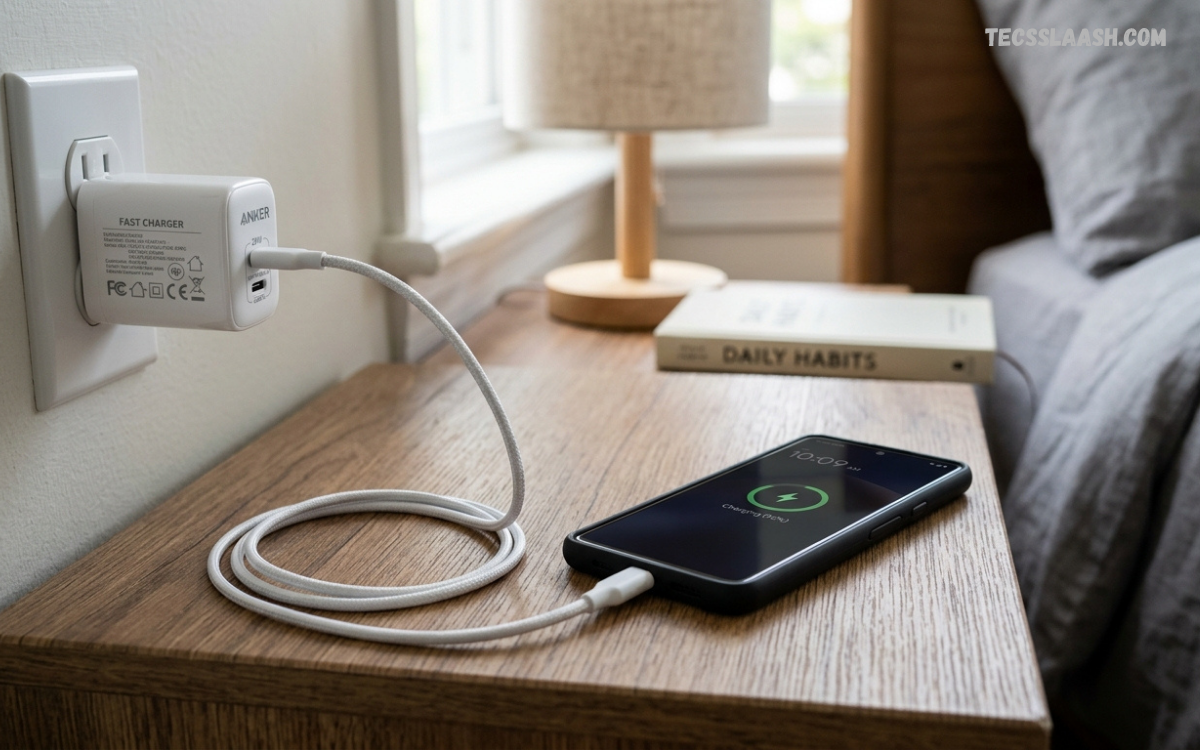
A USB-C phone charger has become an essential smartphone accessory because modern phones increasingly use USB-C ports for charging and data transfer. USB-C technology offers convenient connections, efficient power delivery, and broad compatibility across many devices.
Modern USB-C phone charger options vary significantly in charging speed, power output, cable quality, portability, and safety features. Understanding these differences helps users choose a charger that fits their smartphone.
What Is a USB-C Phone Charger?
A USB-C phone charger is a charging solution designed to power smartphones through a USB Type-C connection. The system normally includes a wall adapter and USB-C cable, although some chargers are sold separately.
USB-C charging technology supports different power levels depending on the charger, cable, phone, and charging standard. Many modern smartphones can automatically negotiate an appropriate power level.
Why USB-C Phone Chargers Are Popular
USB-C phone charger technology has become popular because USB-C ports are increasingly common across smartphones, tablets, laptops, headphones, power banks, and other electronics. A single charger can therefore support several devices when their power requirements and charging standards are compatible.
Another advantage is convenience. USB-C connectors are reversible and generally easier to handle than older USB connector designs. USB-C also supports faster data transfer and advanced charging technologies with compatible hardware.
How USB-C Charging Works
USB-C charging works through communication between the charger and connected device. When a phone is connected, the charging system determines an appropriate power level based on supported specifications.
Charging speed depends on several components working together. The smartphone must support the relevant charging technology, the power adapter must provide compatible output, and the cable must support the required current and charging capability.
USB-C Phone Charger Power Output
Power output is one of the most important specifications when selecting a USB-C phone charger. Charger output is commonly expressed in watts, calculated from voltage and current. A higher wattage rating does not automatically mean every phone will charge at that maximum speed.
A smartphone typically accepts only the amount of power it is designed to use. For example, connecting a phone that supports a lower charging rate to a higher-output adapter typically does not force the phone to use the adapter’s full capacity.
USB-C Fast Charging
Fast charging lets compatible smartphones replenish their batteries faster than standard charging. USB-C has helped expand fast-charging capabilities because the connector and related specifications can support higher power levels.
Evaluate a USB-C phone charger advertised as fast charging based on its supported charging protocol and power rating. The phone must support the same or compatible technology to achieve the expected speed.
USB Power Delivery and USB-C
USB Power Delivery, commonly called USB PD, is an important charging technology associated with USB-C. It allows compatible devices and chargers to negotiate power requirements. Depending on the hardware, USB PD can support significantly higher power levels than traditional USB charging methods.
For smartphones, USB PD can provide efficient and standardized charging when both the phone and charger support compatible specifications. Some manufacturers also use proprietary fast-charging technologies.
Choosing the Right USB-C Phone Charger
Start by checking the smartphone’s supported charging specifications. Look for information about maximum charging power, supported protocols, and recommended adapters. This prevents you from buying a charger that lacks the necessary capabilities or paying extra for power the phone cannot use.
Build quality should also receive attention. A dependable charger should have appropriate electrical protections, a durable enclosure, reliable connectors, and certification or compliance information suitable for the market where it is sold.
USB-C Charger Wattage Guide
USB-C phone chargers come in different wattage levels, from basic low-power adapters to higher-output chargers designed for multiple devices. A smartphone does not necessarily need the highest wattage available. The appropriate rating depends on the phone’s charging capability and the user’s requirements.
Higher wattage can become useful when one adapter needs to support several devices. For example, a multi-port USB-C charger with sufficient power capacity may charge a smartphone alongside another compatible device. However, check total output and port-sharing behavior before purchase.
USB-C Phone Charger Cable Quality
The cable is an important part of the charging system. A high-quality USB-C cable should be appropriately rated for the intended charging power and manufactured with reliable connectors. Not every USB-C cable offers the same charging or data-transfer capabilities.
Cable length can also affect convenience. Short cables are useful for travel and compact setups, while longer cables provide more flexibility near beds, desks, or workspaces.
USB-C Phone Charger Safety Features
Safety is a major consideration when purchasing any charging accessory. Quality USB-C chargers can include protections against overcurrent, overvoltage, overheating, and short circuits.
Users should purchase chargers from established manufacturers or trusted retailers and avoid products with suspicious specifications or unclear certification information. A charger that appears inexpensive but lacks reliable safety documentation may provide poor long-term value.
USB-C Charger Compatibility
Compatibility involves more than simply matching a USB-C connector. A phone may physically connect to a charger while supporting only certain charging speeds or protocols. Checking technical specifications ensures that the selected charger can deliver the intended charging performance.
Some USB-C adapters can also charge tablets, earbuds, gaming accessories, and other electronics. A multi-device charger can reduce clutter and simplify travel. However, users should verify each device’s required charging specifications and understand how the charger distributes its total power across multiple ports.
USB-C Phone Charger for Travel
A compact USB-C phone charger can be especially useful during travel. Small wall adapters take less space in luggage while still providing enough power for everyday smartphone charging. Foldable plug designs can further improve portability and reduce the chance of damaging other items in a travel bag.
Travel users should also consider regional electrical standards and plug compatibility. A charger designed for one electrical system may require an appropriate plug adapter when used elsewhere. Multi-port USB-C chargers add convenience by letting several compatible devices share one charging accessory.
Multi-Port USB-C Phone Charger
A multi-port USB-C phone charger can charge multiple compatible devices from one wall outlet. This setup is useful for households, offices, and travel situations where several electronics need regular charging. Depending on the model, multiple ports may share the charger’s total power capacity.
When buying a multi-port model, check the output for each port and the combined maximum output. Some chargers reduce the power available to individual ports when several devices are connected. Understanding this behavior helps users avoid unexpected reductions in charging speed.
USB-C Phone Charger for Different Smartphones
Many current smartphones use USB-C connections, but charging performance varies by brand and model. One phone may support a particular fast-charging protocol while another uses a different technology. So a USB-C connector alone doesn’t guarantee the same charging speed across devices.
Before buying a charger, check your phone’s official specifications. The recommended power rating, supported charging protocols, and cable requirements can help determine which charger is suitable. This approach provides better results than choosing an adapter based only on its advertised wattage.
Benefits of Using a Quality USB-C Phone Charger
A quality USB-C phone charger can provide dependable daily charging, consistent power delivery, and useful compatibility across modern electronics. A well-designed adapter can also make charging more convenient because users can rely on one accessory for multiple compatible devices.
Durability is another important benefit. Better construction can help the charger withstand regular plugging, unplugging, travel, and everyday handling. Although a quality charger may cost more initially, reliable materials and appropriate safety features can make it a more practical long-term accessory.
Common USB-C Charging Problems
Slow charging is one of the most common USB-C charging problems. It can result from a low-power adapter, an unsuitable cable, an unsupported charging protocol, a damaged connector, or phone settings. Battery temperature and device usage can also influence charging speed.
Intermittent charging may indicate a damaged cable, loose connection, debris in the charging port, or an adapter problem. Users should inspect accessories carefully and avoid forcing connectors into the phone. If a charging port appears damaged, professional inspection may be appropriate rather than continued use.
How to Improve USB-C Charging Performance
Using a charger and cable that match the phone’s specifications is one of the simplest ways to achieve reliable charging performance. Users should also connect the cable securely and avoid heavily damaged accessories. Keeping charging equipment clean and protected can improve long-term reliability.
Heavy phone usage during charging can increase power consumption and reduce the apparent charging rate. Gaming, video streaming, navigation, and other demanding activities may consume significant power while the phone is connected. To charge faster, reduce intensive usage while charging.
USB-C Phone Charger Maintenance
Proper maintenance can extend the useful life of a USB-C phone charger. Keep the adapter and cable away from excessive moisture, extreme heat, and physical stress. Avoid wrapping cables tightly around the charger, as repeated sharp bends can damage internal conductors.
Inspect the cable and adapter periodically for cracks, bent connectors, fraying, unusual smells, or excessive heat. Do not use damaged accessories just because they still appear to charge a device. Replacing a damaged charger or cable can reduce the risk of further equipment problems.
USB-C Charger Versus Older Chargers
USB-C chargers offer several advantages over older charging standards, including reversible connectors and broader support for modern power-delivery technologies. USB-C is also increasingly used across different categories of consumer electronics, making compatible accessories more versatile.
Older USB charging systems may still work with appropriate cables or adapters, but their power capabilities can be more limited depending on the standard. Users upgrading to newer smartphones may benefit from moving to a USB-C charging setup that matches the phone’s supported specifications.
Read Also: Best Phone Accessories for Cars
USB-C Phone Charger for Home Use
For home use, users can choose a charger based on how many devices they regularly charge. A single-port adapter may be enough for one smartphone, while a multi-port model can help households with several USB-C devices.
Placement also matters. A compact charger can fit easily beside a bed, desk, or workstation. Users who charge multiple devices should select a model with enough output capacity to avoid unnecessary charging delays when several devices are connected simultaneously.
USB-C Phone Charger for Work
A USB-C phone charger can simplify charging at an office or home workspace. A compact adapter can stay on a desk while another charger stays in a travel bag. This reduces the need to repeatedly unplug and transport the same accessory.
For users with multiple USB-C devices, a higher-capacity multi-port charger can provide a convenient centralized charging solution. Checking total output capacity still matters because charging several devices at once can reduce the power available to each port.
USB-C Phone Charger for Power Banks
Many modern power banks use USB-C for both input and output. This lets a USB-C phone charger recharge the power bank, which can then supply power to compatible devices. The result is a flexible charging system for travel and situations without convenient wall outlets.
Power bank charging speed depends on the power bank’s input specifications and the charger’s output capabilities. A high-output charger cannot necessarily make a power bank charge faster than its maximum supported input rate. Checking both specifications helps users choose a suitable combination.
USB-C Charger and Battery Health
Charging technology can influence the overall charging experience, but battery health depends on many factors. Battery chemistry, temperature, charging cycles, device design, and usage patterns all contribute to long-term battery performance.
Modern smartphones include charging controls designed to manage battery operation within their supported specifications. Users should use compatible chargers and avoid exposing devices to excessive heat during charging.
How to Identify a Reliable USB-C Phone Charger
Reliable chargers usually provide clear information about manufacturer identity, output specifications, safety certifications, supported charging technologies, and model details. Transparent specifications make it easier to determine whether the charger matches a smartphone’s requirements.
Consumers should be cautious of products that make unusually high performance claims without supporting technical information. Extremely low prices can also warrant additional scrutiny when product quality and safety are unclear.
USB-C Phone Charger Buying Checklist
Before buying a USB-C phone charger, check the smartphone’s maximum supported charging power and compatible charging standards. Next, verify the adapter’s output specifications and confirm that the cable supports the required power level.
Consider portability, number of ports, cable length, build quality, and safety protections based on your needs. A charger chosen to match your needs can offer better value than simply picking the highest-wattage model available.
Future of USB-C Charging
USB-C continues to play an important role in the modern electronics ecosystem. Its use across smartphones, computers, tablets, accessories, and other devices has increased charger and cable compatibility.
As device manufacturers adopt common charging interfaces, users may increasingly rely on fewer charging accessories. This can simplify travel and reduce accessory clutter.
Frequently Asked Questions
Is a USB-C phone charger compatible with every USB-C phone?
A USB-C phone charger can physically connect to many USB-C smartphones, but charging speed and supported features may differ. For expected performance, the phone and charger must support compatible charging specifications.
Does a higher-wattage USB-C charger charge a phone faster?
A higher-wattage USB-C charger can provide more available power, but the phone determines how much power it accepts. A smartphone with a lower charging limit generally won’t use the adapter’s full rated output.
Can one USB-C charger charge multiple devices?
Yes, a multi-port USB-C charger can charge several compatible devices when its ports and total output support those devices. Smartphones, tablets, earbuds, and other USB-C electronics can potentially share one adapter.
Are all USB-C cables the same?
No. USB-C cables can differ in charging capability, data-transfer speed, construction, and supported power levels. Two cables can use the same connector while offering different technical capabilities.
How can I choose the right USB-C phone charger?
Start by checking the phone’s supported charging power and charging protocols. Then choose a charger with compatible output and a cable that supports the required charging level.
Why is my USB-C phone charger charging slowly?
Slow charging can happen because of a low-power adapter, an unsuitable cable, an incompatible charging protocol, a damaged accessory, high device temperature, or intensive phone usage. Battery management can also affect charging speed.
Can I use a laptop USB-C charger for my phone?
A compatible laptop USB-C charger can often charge a smartphone because USB-C Power Delivery systems can negotiate an appropriate power level. The phone generally determines how much power it accepts.
Is USB-C better than older phone charging connectors?
USB-C offers a reversible connector and supports modern charging and data technologies. It is also widely used across different categories of electronics, which can make compatible accessories more versatile.
How long does a USB-C phone charger last?
The lifespan of a USB-C phone charger depends on build quality, usage frequency, storage conditions, cable handling, and electrical conditions. A well-built charger can stay useful for years with proper care.
What should I look for in a USB-C phone charger?
Look for appropriate power output, compatible charging protocols, reliable construction, safety protections, and a reputable manufacturer. The charger should match the smartphone’s technical requirements rather than simply offering the highest possible wattage.
Conclusion
A USB-C phone charger is a practical accessory for modern smartphone users, offering convenient connectivity and support for increasingly capable charging technologies.
The best approach is to match the charger with the smartphone’s documented requirements rather than choosing based solely on wattage or marketing claims. A reliable USB-C phone charger can provide convenient everyday charging while supporting a broader range of compatible electronics.

