


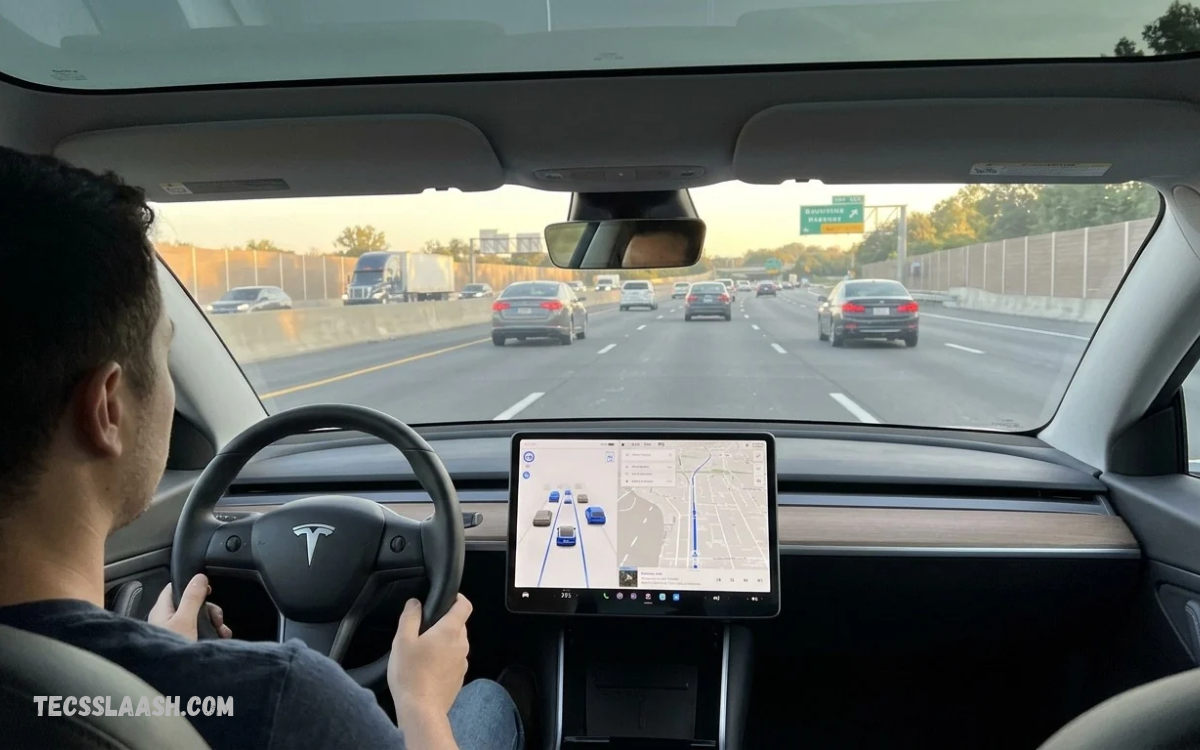
Tesla Autopilot is a driver-assistance system designed to support drivers during certain driving situations. Available features depend on the vehicle model, software version, region, and configuration.
The growing popularity of electric vehicles has made Tesla Autopilot an important topic in automotive technology. Drivers often want to understand how the system works, what features it offers, and what limitations to expect.
What Is Tesla Autopilot?
Tesla Autopilot is an advanced driver-assistance system developed by Tesla to help manage specific driving tasks. Depending on the vehicle and available software, its core functions include Traffic-Aware Cruise Control and Autosteer.
Tesla Autopilot belongs to the broader category of advanced driver-assistance systems, commonly known as ADAS. These systems support human drivers rather than remove their responsibility.
How Tesla Autopilot Works
Tesla Autopilot uses external cameras, onboard computing, and software to interpret information about the road and nearby objects. Depending on the vehicle’s equipment and market, the system processes visual information to identify lane markings, other vehicles, and the surrounding environment.
The technology continuously evaluates available information while the relevant features are active. However, cameras cannot interpret every situation perfectly, and software can make mistakes in difficult or unpredictable conditions.
Key Features of Tesla Autopilot
Tesla Autopilot is designed to reduce the workload associated with certain routine driving tasks. Traffic-Aware Cruise Control can adjust vehicle speed to follow traffic, while Autosteer provides steering assistance to help the vehicle remain within a suitable lane.
Feature availability depends on the vehicle, software configuration, market, and applicable regulations. Some advanced driving-assistance options are sold separately or offered through different packages and may not be included in the basic Autopilot system.
Traffic-Aware Cruise Control
Traffic-Aware Cruise Control helps manage vehicle speed by responding to traffic ahead. When operating within its supported conditions, the system can reduce speed to maintain a selected following distance and accelerate again when traffic permits.
However, cruise control does not guarantee a safe stopping distance in every situation. Sudden braking, vehicles cutting into the lane, road debris, poor visibility, and unexpected hazards can require immediate driver action.
Autosteer and Lane Assistance
Autosteer provides steering assistance to help keep a Tesla within a detected lane under suitable conditions. It can reduce the amount of continuous steering input required during supported journeys, particularly when lane markings are clear, and the road layout is appropriate.
Lane assistance does not mean that the car can safely navigate every road without human intervention. Faded markings, sharp bends, construction areas, confusing intersections, and unexpected obstacles can limit performance.
Tesla Autopilot Safety Features
Tesla vehicles may include additional active safety technologies that help detect potential hazards or warn drivers about dangerous situations. Depending on model and configuration, these can include collision warnings, blind-spot monitoring, lane-departure assistance, and automatic emergency braking.
These safety systems have limitations and cannot prevent every collision. Visibility, road conditions, camera obstructions, and the nature of a developing hazard can affect their performance. Drivers should continue to follow traffic laws, observe their surroundings, and respond to warnings immediately.
Is Tesla Autopilot Fully Self-Driving?
Tesla Autopilot is not a fully autonomous driving system. Its standard functions assist with selected driving tasks, but the driver remains responsible for controlling the vehicle and responding to changing road conditions.
Tesla also offers additional driving-assistance capabilities in certain markets and configurations, including packages marketed under the Full Self-Driving name. The name does not mean the vehicle can operate without supervision under all conditions.
Benefits of Tesla Autopilot
One potential benefit of Tesla Autopilot is reduced workload during supported driving situations. Maintaining speed and receiving steering assistance can make some longer journeys feel more consistent.
Another benefit is its integration with the vehicle’s software and onboard technology. Tesla vehicles can receive software updates that change or improve certain functions, depending on hardware compatibility and regional availability.
Limitations of Tesla Autopilot
Tesla Autopilot depends on the quality of information its cameras and computing systems can gather. Heavy rain, fog, snow, direct sunlight, dirty cameras, obstructed views, unclear lane markings, and complicated road layouts can affect system performance.
The system also cannot predict every driver’s actions or correctly interpret every unusual road situation. A vehicle ahead may brake suddenly, a pedestrian may enter the road, or construction work may change traffic patterns without warning.
Tesla Autopilot and Road Safety
Road safety depends on responsible driving, awareness, vehicle condition, and compliance with traffic regulations. Tesla Autopilot can support certain driving tasks, but it does not remove the driver’s responsibility to watch the road and react to hazards.
Regulatory authorities have also examined concerns involving driver supervision and misuse of automated steering assistance. In the United States, the National Highway Traffic Safety Administration investigated Tesla Autopilot and reviewed a recall intended to address concerns about driver engagement and system controls.
Read Also: Best Power Banks for Smartphones: Top Picks for Fast Charging and Long-Lasting Battery Life
Tesla Autopilot User Experience
The driving experience with Tesla Autopilot depends on the road, traffic, vehicle configuration, and driver’s familiarity with the system. On suitable roads, speed control and steering assistance can reduce the need for constant manual adjustments.
However, the experience can become less predictable when traffic behaves unexpectedly or road conditions change. Drivers must remain engaged, monitor the vehicle’s actions, and be ready to intervene without delay.
Tesla Autopilot Compatibility and Availability
Tesla Autopilot availability varies according to vehicle model, production year, installed hardware, software configuration, and local regulations. A feature offered on one Tesla may not be available on another, even when the vehicles share a similar name.
Before purchasing a Tesla or expecting a particular feature, buyers should confirm the vehicle’s exact specifications. The touchscreen’s software information and the official owner’s manual can help identify the installed equipment and supported functions.
Tesla Autopilot Software Updates
Tesla vehicles can receive over-the-air software updates that introduce changes, improve existing functions, or address certain software-related issues.
However, an update does not guarantee that every feature will improve or become available on every vehicle. Hardware limitations, local regulations, and regional software configurations still matter.
Tesla Autopilot Compared with Traditional Driving
Traditional driving requires the driver to control steering, acceleration, and braking directly. Tesla Autopilot can assist with selected tasks, potentially reducing some repetitive inputs during suitable journeys.
Neither approach eliminates the need for safe driving practices. Traditional drivers must remain alert, while Tesla drivers must also understand the behavior and limitations of assistance features.
Tesla Autopilot and Electric Vehicle Technology
Tesla Autopilot forms part of a broader technological ecosystem that includes electric powertrains, onboard computers, digital displays, cameras, and connected software. These technologies work together to create a driving experience that differs from conventional vehicles.
This combination of electric mobility and intelligent assistance reflects a broader trend in the automotive industry. Manufacturers continue developing systems that support parking, speed control, lane positioning, and hazard detection.
The Future of Tesla Autopilot
The future of Tesla Autopilot will depend on advances in computer vision, artificial intelligence, onboard processing, software development, and safety validation. Better environmental perception and more reliable decision-making could improve the performance of supported driving functions.
Future developments may introduce new capabilities or improve existing assistance features through compatible hardware and software. However, progress should be measured by reliable performance and demonstrated safety rather than marketing claims alone.
Tips for Using Tesla Autopilot Responsibly
Before activating Tesla Autopilot, drivers should read the owner’s manual, understand the available controls, and confirm that road conditions are appropriate. They should keep cameras unobstructed, follow the vehicle’s warnings, maintain a safe following distance, and remain attentive throughout the journey.
Drivers should also know how to disengage the system and immediately resume manual control. They must not use phones, get distracted, or assume the vehicle will handle every hazard on its own.
Is Tesla Autopilot Worth Understanding?
Tesla Autopilot is an important example of how automotive technology can support selected driving tasks. Its speed-control and steering-assistance functions offer convenience in appropriate conditions, while connected software and onboard computing help deliver its capabilities.
The system’s value ultimately depends on the driver’s needs, vehicle configuration, road conditions, and expectations. Anyone considering a Tesla should review the available features, costs, limitations, and safety requirements before deciding.
Frequently Asked Questions
What does Tesla Autopilot do?
Tesla Autopilot assists with selected driving tasks, including speed control and steering within supported conditions. Its available functions depend on the vehicle and software configuration. The driver must remain attentive and ready to take control whenever necessary.
Does Tesla Autopilot drive without a driver?
No. Tesla Autopilot requires active driver supervision and does not make a vehicle fully autonomous. Drivers must monitor traffic, follow road rules, and intervene when the system cannot handle a situation safely.
Is Tesla Autopilot available on every Tesla?
Availability depends on the vehicle, hardware, software configuration, and market. Many newer Tesla vehicles include basic Autopilot functions, but buyers should confirm the exact features installed in their specific vehicle.
Can weather affect Tesla Autopilot?
Yes. Heavy rain, fog, snow, direct sunlight, and obstructed cameras can affect system performance. Drivers should remain alert, follow vehicle warnings, and take control whenever conditions make assistance unreliable.
Does Tesla Autopilot receive software updates?
Compatible Tesla vehicles can receive over-the-air software updates that change or improve certain functions. Available changes depend on the vehicle’s hardware, software version, and region. Owners should review official release information for their specific car.
Conclusion
Tesla Autopilot demonstrates how advanced driver-assistance technology can make certain driving tasks more convenient.
Despite these capabilities, Tesla Autopilot is not a replacement for an attentive driver. Understanding its features, limitations, compatibility requirements, and safety responsibilities is essential for responsible use.

