


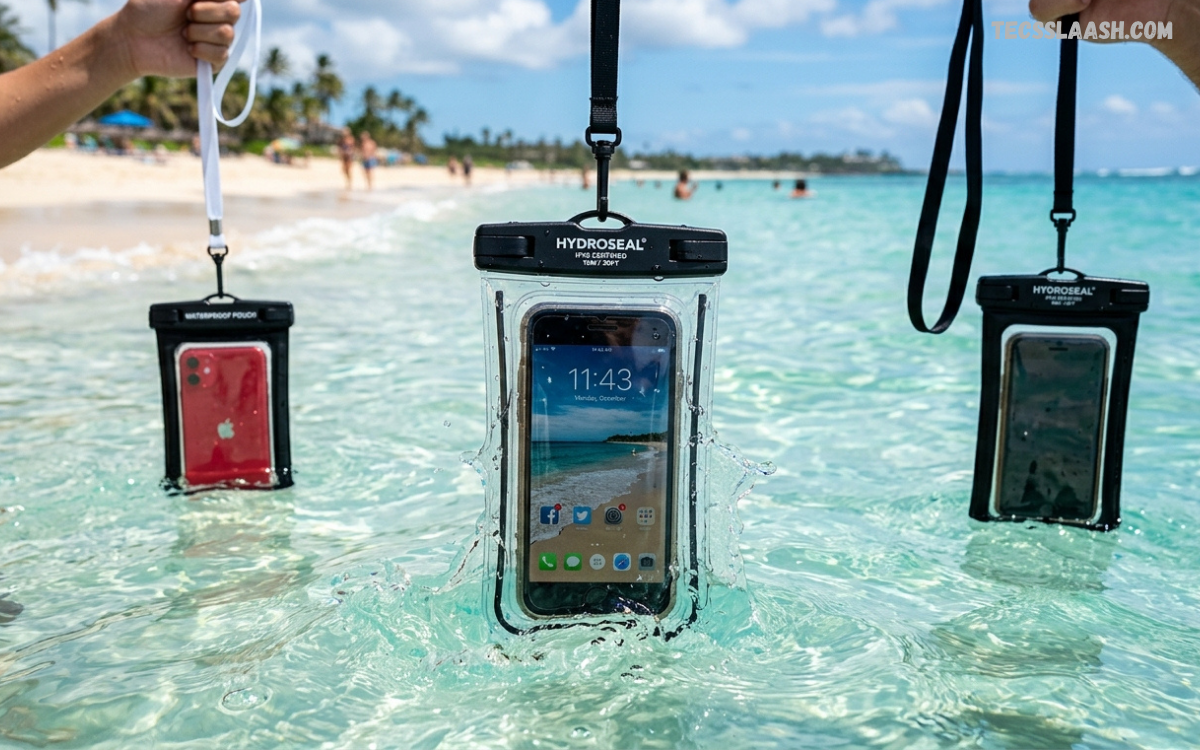
Water damage remains one of the most common risks for modern smartphones. A phone can encounter water during swimming, beach trips, rainy weather, boating, hiking, camping, or accidental spills. A reliable protective case can reduce this risk while keeping a smartphone accessible for calls, photos, navigation, and everyday tasks.
Waterproof phone cases provide a protective barrier around a smartphone and help prevent water from reaching sensitive internal components. Different designs offer different levels of protection, so choosing the right case requires attention to waterproof ratings, sealing systems, materials, touchscreen performance, camera access, and device compatibility.
What Are Waterproof Phone Cases?
Waterproof phone cases are protective covers designed to create a sealed barrier between a smartphone and water. Depending on the design, a case may surround the entire device with sealed materials, use a locking mechanism, or combine a rigid shell with waterproof gaskets. These features help reduce exposure to moisture during outdoor and water-based activities.
A quality waterproof case should protect more than the phone’s rear panel. Effective designs cover vulnerable areas such as charging ports, buttons, speakers, camera openings, and screen edges. Some models use transparent materials that allow touchscreen operation and photography while the phone remains enclosed inside the protective structure.
Why Use Waterproof Phone Cases?
Smartphones contain delicate electronic components that can malfunction after water exposure. Even a small amount of moisture entering through a charging port, speaker opening, or damaged area can create problems. A waterproof case adds another protective layer, reducing the chance of direct contact between water and the device.
Waterproof phone cases can also provide practical protection during situations where ordinary cases offer limited coverage. Beach visits, pool activities, kayaking, fishing, rainy commutes, and outdoor adventures can expose phones to water repeatedly.
Waterproof Phone Cases vs. Water-Resistant Phone Cases
The terms “waterproof” and “water-resistant” are often used interchangeably, but they can describe different levels of protection. Water-resistant products are generally designed to handle limited moisture exposure, while waterproof designs focus on creating a stronger barrier against water.
Smartphone manufacturers also publish water-resistance specifications for individual devices. These specifications do not automatically mean a phone can be safely used underwater for every activity.
Understanding Waterproof Ratings
Waterproof phone cases may include an IP rating that describes resistance against dust and water under standardized testing conditions. The letters “IP” are followed by two numbers. The first number relates to protection against solid particles, while the second number indicates water protection.
An IP rating does not mean unlimited protection under every real-world condition. Testing environments differ from swimming pools, oceans, showers, and moving water. Water pressure, temperature, chemicals, impact, wear, and incorrect installation can affect protection.
Important Features of Waterproof Phone Cases
A dependable waterproof case should combine sealing performance with practical everyday usability. Strong seals, secure closures, reinforced edges, protected ports, and durable materials can improve overall protection. A transparent front panel can also preserve touchscreen access without requiring users to remove the case during wet conditions.
Camera performance is another important feature. Some waterproof phone cases include clear camera windows designed to reduce distortion during photography. Other designs use flexible transparent membranes that allow users to operate the phone while enclosed.
Waterproof Phone Cases for Swimming
Swimming creates demanding conditions for phone protection because a smartphone may remain around water for extended periods. A suitable case for swimming should provide a secure seal and a closure system designed to prevent accidental opening.
Users planning underwater photography should pay close attention to the case’s stated depth and time limitations. A case intended for occasional splashes may not be appropriate for underwater use. Before taking an expensive smartphone underwater, users should inspect every seal and follow the manufacturer’s recommended preparation procedure.
Waterproof Phone Cases for Beach Trips
Beach environments combine water, sand, salt, sunlight, and physical activity. A waterproof case can help reduce exposure to seawater while also creating a barrier against sand entering vulnerable phone openings. This makes full-coverage designs particularly useful for beach photography and outdoor activities.
Sand can create additional problems by entering small openings or scratching exposed surfaces. A case with sealed edges and covered ports can reduce this exposure. After a beach trip, the exterior of the case should be cleaned according to manufacturer instructions, especially after contact with saltwater or sand.
Waterproof Phone Cases for Rain
Rain protection is one of the simplest reasons to use a waterproof case. Walking, cycling, hiking, commuting, or traveling during wet weather can expose a smartphone to continuous moisture. Even when a phone has some built-in water resistance, additional case protection can provide another barrier.
A waterproof case designed for rain should maintain access to essential functions such as navigation, messaging, photography, and calls. Touchscreen sensitivity is especially important because thick or poorly fitted protective materials can make screen operation difficult. A good design balances moisture protection with convenient phone access.
Waterproof Phone Cases for Outdoor Adventures
Outdoor activities can expose smartphones to more than water. Hiking, camping, kayaking, fishing, cycling, and boating may involve rain, mud, dust, drops, and rough surfaces. A rugged waterproof case can combine water protection with impact resistance, giving the phone broader protection during demanding activities.
For outdoor use, attachment options can also be valuable. Lanyard loops, belt clips, carabiners, and compatible mounting systems can help keep the phone secure. Users should select attachment systems designed for the activity because accidental drops into water can occur when a case is carried loosely.
Materials Used in Waterproof Phone Cases
Manufacturers use several materials when producing waterproof cases. Polycarbonate is common in rigid protective shells because it can provide structural strength while remaining relatively lightweight. Thermoplastic materials can offer flexibility, impact absorption, and resistance against everyday wear.
Silicone and rubber-like materials are often used around edges, seals, buttons, and protective components. These materials can help create flexible barriers while maintaining grip. Transparent films and membranes may cover screens or camera openings.
Full-Coverage Waterproof Phone Cases
Full-coverage waterproof phone cases surround most or all exposed areas of a smartphone. These cases commonly include a front screen protector, a sealed rear section, covered ports, protected buttons, and reinforced edges. The enclosed design can provide broad protection against water and environmental debris.
The main advantage of full coverage is reduced exposure. However, completely enclosed cases can sometimes affect touchscreen responsiveness, audio quality, wireless charging, or camera performance. Before purchasing, users should check whether the case supports the features they use most frequently.
Waterproof Phone Pouches
Waterproof phone pouches use flexible transparent material to create a sealed enclosure around a smartphone. Many pouches include locking mechanisms at the opening and attachment points for carrying. Their universal design can accommodate multiple phone sizes, making them practical for travel and occasional water activities.
The main benefit of a pouch is versatility. A single pouch can often protect different devices without requiring a phone-specific model. However, touch control and camera quality may vary depending on material thickness and design. Users should test the pouch before relying on it during important outdoor activities.
Waterproof Phone Cases With Camera Protection
Modern smartphones depend heavily on advanced camera systems, making lens protection an important consideration. Waterproof cases may include dedicated camera covers or transparent windows positioned over the camera module. The design should maintain optical clarity without creating excessive reflections or image distortion.
Camera protection becomes especially useful during underwater photography, rainy trips, and beach activities. Before taking photographs, users should inspect the camera window for fingerprints, condensation, scratches, or trapped moisture. A clean and properly fitted camera section can help maintain image quality.
Waterproof Phone Cases With Touchscreen Access
Touchscreen usability can vary considerably between waterproof cases. A rigid front cover may preserve screen visibility but slightly change touch sensitivity. Flexible membranes may provide more direct interaction, although the experience can depend on the phone model and case material.
Users should consider common tasks before selecting a case. If the phone will mainly remain protected during transport, touchscreen performance may be less important. For navigation, photography, messaging, or music control during outdoor activities, responsive touchscreen operation becomes much more valuable.
Waterproof Phone Cases With Port Protection
Charging ports are among the most vulnerable openings on a smartphone. Waterproof cases may use sealed port covers, plugs, or integrated protective doors to reduce water entry. These components should close securely without requiring excessive force.
Port protection also requires regular inspection. Dirt, sand, lint, and other debris can prevent a cover from sealing correctly. Users should keep protective components clean and check for cracks, deformation, or worn seals before using the phone around water.
Choosing the Right Size and Fit
Phone compatibility should be one of the first factors checked before buying a waterproof case. Smartphone models can have different dimensions, camera layouts, button positions, and port locations. Even phones with similar screen sizes may require different case designs.
A correctly fitted case should hold the phone securely without excessive movement. Seals should sit evenly around the protected areas, while buttons and camera openings should align correctly. Universal pouches are more flexible, but phone-specific cases can provide a more precise fit.
Waterproof Phone Cases for Travel
Travel often involves unpredictable weather, pools, beaches, boats, and outdoor sightseeing. A compact waterproof case can help protect a smartphone throughout these situations without requiring users to carry several separate protective accessories.
Travelers should consider cases that are lightweight, easy to store, and simple to inspect. A secure lanyard or attachment point can also reduce the chance of dropping the phone. For frequent travel, durability and easy cleaning may be more useful than unnecessary features.
How to Test a Waterproof Phone Case
Testing a waterproof case before placing a valuable smartphone inside is an important precaution. Users can follow the manufacturer’s recommended testing procedure, which commonly involves checking seals and closures before introducing the phone. The exact method depends on the case design.
A test can reveal problems such as an incorrectly positioned gasket, damaged closure, or manufacturing defect. Users should never assume a case is waterproof simply because it looks sealed. Following the manufacturer’s instructions provides a safer way to verify the case before real-world use.
Read Also: Best Stylish Phone Cases for a Modern Look
How to Maintain Waterproof Phone Cases
Regular maintenance can help preserve the protective performance of a waterproof case. After exposure to water, users should inspect seals, closures, port covers, and transparent panels. Sand and dirt should be removed carefully using the cleaning method recommended by the manufacturer.
Repeated folding, stretching, opening, and closing can gradually affect flexible materials and seals. Scratches or cracks may also reduce protection. Replacing a damaged case is preferable to relying on a protective product that no longer maintains its original condition.
Common Mistakes When Using Waterproof Phone Cases
One common mistake is failing to close the case completely. A small gap can compromise protection even when the case itself has a strong waterproof design. Another mistake involves using a case beyond its stated depth or time limitations.
Users may also overlook damage caused by drops, heat, chemicals, or repeated use. A case can appear normal while a seal has become worn or displaced. Inspecting the case before each demanding water activity can reduce the risk of unexpected protection failure.
Waterproof Phone Cases and Wireless Charging
Some waterproof cases support wireless charging, while others are too thick or use materials that interfere with charging performance. Users who rely on wireless charging should confirm compatibility before purchasing a case.
Even when wireless charging works through the case, charging speed may vary. Alignment between the phone and charging pad can also become more important with thicker protective designs. Checking manufacturer compatibility information can prevent charging problems after installation.
Waterproof Phone Cases and Wireless Signals
Protective materials can sometimes influence wireless performance, although many modern cases are designed to support normal connectivity. Users may need to consider cellular, Wi-Fi, Bluetooth, NFC, and wireless charging requirements when selecting a fully enclosed case.
A case designed for water protection should not unnecessarily interfere with the phone’s essential communication features. Checking product specifications and user documentation can help identify compatibility limitations before purchase.
Are Waterproof Phone Cases Worth Using?
The usefulness of a waterproof case depends on the environment, phone value, and level of water exposure. Someone who regularly spends time near pools, beaches, boats, or rainy outdoor environments may have different protection requirements from someone who mainly uses a phone indoors.
A waterproof case can serve as an additional layer of protection, but no protective product should be treated as completely risk-free. Correct installation, suitable usage conditions, regular inspection, and adherence to stated ratings are important parts of effective phone protection.
Waterproof Phone Cases Buying Guide
Start by identifying the type of water exposure the phone will face. Occasional rain may require a different design from swimming, snorkeling, boating, or underwater photography. This distinction helps narrow the selection based on the case’s stated protection level.
Next, check compatibility, sealing technology, materials, camera performance, touchscreen access, port protection, attachment options, and charging support. A practical case should protect the phone without making everyday functions unnecessarily difficult.
Frequently Asked Questions
Can waterproof phone cases prevent all water damage?
No protective case can guarantee protection under every condition. Performance depends on the design, seal condition, usage environment, water depth, exposure duration, and manufacturer’s specifications. A case should always be used within its stated limitations.
Can I take my phone underwater with a waterproof case?
Some cases are specifically designed for underwater use, while others are intended only for rain or splashes. Check the manufacturer’s depth and duration specifications before underwater use and test the case according to its instructions.
Are waterproof phone cases suitable for swimming?
Some models are designed for swimming and underwater activities, but suitability depends on the product’s specifications. A basic splash-resistant case should not automatically be treated as suitable for prolonged underwater use.
Do waterproof cases affect touchscreen performance?
They can. Front protective membranes or rigid screen covers may change touch sensitivity. Product design and phone compatibility influence the experience, so touchscreen performance should be considered before purchase.
Can waterproof cases protect phones from sand?
Many full-coverage waterproof cases can reduce sand exposure by covering ports and openings. However, sand can still accumulate around seals and attachment areas, so cleaning and inspection remain important after beach use.
Do waterproof phone cases support wireless charging?
Some do, while others may need to be removed before charging. Compatibility depends on case thickness, materials, phone model, and charging system. Check product specifications before purchasing.
How often should a waterproof phone case be replaced?
Replacement depends on condition and usage. Cracks, damaged seals, loose closures, distorted materials, or worn port covers indicate that a case should be replaced rather than trusted for demanding water exposure.
Can I use a waterproof case during heavy rain?
A case designed for rain or stronger water exposure can provide useful protection during heavy rain. Make sure every closure and port cover is properly sealed before exposing the phone to wet conditions.
Are waterproof pouches better than waterproof cases?
Pouches and cases serve different needs. Pouches offer flexible sizing and portability, while phone-specific cases can provide a more precise fit and integrated protection. The appropriate design depends on how and where the phone will be used.
What should I check before buying waterproof phone cases?
Check phone compatibility, waterproof rating, depth and time limits, sealing system, camera protection, touchscreen access, port covers, materials, durability, charging compatibility, and manufacturer instructions. These factors help determine whether a case matches the intended use.
Conclusion
Waterproof phone cases provide an additional layer of protection for smartphones exposed to rain, pools, beaches, travel, and outdoor activities. Their effectiveness depends on construction quality, proper sealing, compatible sizing, maintenance, and use within documented limits.
Choosing a case should begin with the environment in which the phone will be used. A lightweight pouch may suit occasional travel, while a full-coverage case may be more appropriate for demanding outdoor conditions.

