


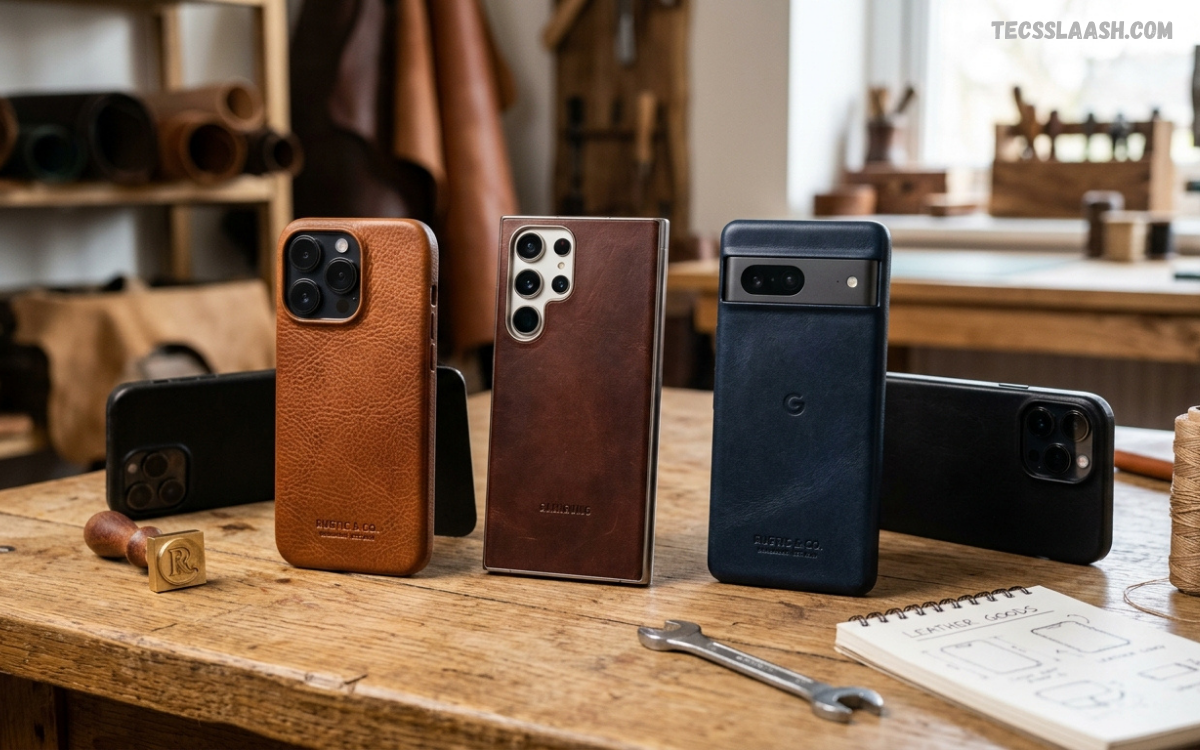
Leather phone cases combine classic appearance, comfortable handling, and dependable smartphone protection. A quality case can give a phone a refined look while helping protect its exterior from everyday scratches, minor impacts, dust, and surface wear.
Modern leather phone cases are available in many designs, including slim covers, wallet cases, folio cases, bumper-style designs, and cases with card slots. Different materials, finishes, colors, and construction methods allow users to choose a case that matches their phone, lifestyle, and protection requirements.
What Are Leather Phone Cases?
Leather phone cases are protective smartphone covers made with genuine leather, synthetic leather, or leather-like materials. Genuine leather is produced from animal hide and can develop a natural patina as it ages.
The outer leather layer may be combined with materials such as polycarbonate, TPU, microfiber, or other protective structures. This layered construction can improve impact resistance while maintaining the visual appeal of leather.
Why Choose Leather Phone Cases?
One major reason people choose leather phone cases is their premium appearance. Leather offers a timeless texture that can look more sophisticated than basic plastic covers. Depending on the finish, a leather case may have a smooth, grainy, matte, or slightly textured surface that adds visual character without making the phone appear overly bulky.
Leather can also provide a comfortable grip during everyday use. Many leather surfaces feel softer and warmer in the hand than hard plastic or glass. With regular handling, genuine leather may develop a patina that changes its color and texture gradually.
Genuine Leather vs Faux Leather Phone Cases
Genuine leather phone cases use real animal hide and are generally valued for their natural texture, durability, and ability to develop a patina. Leather quality can vary considerably, so the term “genuine leather” alone does not indicate a specific premium grade.
Faux leather phone cases use synthetic materials designed to resemble leather. These cases can provide consistent textures, colors, and finishes while usually offering a wider range of price points. Faux leather may also be easier to clean for some users.
Benefits of Leather Phone Cases
Leather phone cases offer a combination of style and everyday practicality. A properly fitted case can help protect the phone from scratches, scuffs, and minor bumps during normal handling. Raised edges around the display and camera area can provide an additional protective barrier when the case is designed with sufficient edge height.
Another advantage is tactile comfort. Leather generally provides a distinctive surface that can feel secure when holding a smartphone. Wallet-style leather cases can also combine phone protection with storage for cards or other small essentials.
Leather Phone Cases and Smartphone Protection
The primary purpose of any phone case is protection, and leather should not be viewed as the only factor determining protective performance. A leather exterior can provide an attractive protective layer, but impact resistance often depends on the internal frame, corners, edges, lining, and shock-absorbing materials used underneath it.
For stronger protection, look for leather phone cases with reinforced corners, raised bezels, secure internal frames, and impact-resistant materials. A microfiber interior can help reduce contact between the case and phone surface.
Slim Leather Phone Cases
Slim leather phone cases are designed for users who want protection without adding significant thickness or weight. These cases generally use a relatively thin leather exterior combined with a lightweight internal structure. Their compact profile allows the phone to remain easier to carry in pockets, small bags, or everyday organizers.
A slim design can preserve much of the original feel and shape of a smartphone. However, thinner construction may provide less protection against serious drops than a heavily reinforced case. When selecting a slim leather case, check whether it includes raised screen and camera edges, secure corners, precise fitting, and adequate coverage around vulnerable areas.
Leather Wallet Phone Cases
Leather wallet phone cases combine smartphone protection with storage for cards, identification, receipts, or small essentials. Many wallet cases use a folio design with a front cover that folds over the display. Some models include several card slots and a larger compartment, making them suitable for people who want to carry fewer separate items.
A wallet case can simplify daily carrying, but additional storage can increase overall thickness. Too many cards can also place pressure on the phone or cause the case to close poorly. Users should avoid overfilling the compartments and select a design with secure card storage.
Leather Folio Cases
Leather folio cases provide full-body coverage by protecting the back, sides, and front of a smartphone. The front flap can shield the display from contact with objects inside a pocket or bag. Some folio designs also include card slots, stand functionality, or magnetic closures for additional convenience.
The quality of a folio case depends heavily on its construction. Strong stitching, accurate cutouts, secure closures, and a stable internal phone holder can improve everyday usability. A good folio should also allow easy access to buttons, charging ports, speakers, and cameras without requiring the phone to be removed.
Leather MagSafe Phone Cases
Leather phone cases designed for MagSafe-compatible smartphones include magnetic components that allow compatible accessories to attach to the back of the case. These accessories can include chargers, stands, wallets, mounts, and other magnetic products designed for the relevant phone ecosystem.
Magnetic alignment is an important consideration when choosing these cases. A properly designed case should maintain reliable attachment while allowing normal wireless charging. Buyers should verify compatibility with their exact phone model and accessories because magnetic systems can differ between devices and case designs.
How Durable Are Leather Phone Cases?
Durability depends on the leather material, case construction, thickness, stitching, internal frame, and daily usage. High-quality leather can remain attractive for a long period when maintained properly. Over time, genuine leather may develop marks, variations, and patina that contribute to its appearance.
Durability does not mean a leather case will remain completely unchanged. Frequent exposure to moisture, oils, friction, sunlight, and rough surfaces can affect the material. Proper care can reduce unnecessary wear. Users should also inspect the case periodically for loose stitching, damaged edges, weakened corners, or changes that could reduce protection.
How to Clean Leather Phone Cases
Leather requires more careful cleaning than many plastic or silicone cases. Start by removing the phone and gently wiping the exterior with a soft, dry or slightly damp cloth, depending on the manufacturer’s instructions. Avoid soaking the case because excessive moisture can affect leather texture, finish, adhesives, or internal materials.
For genuine leather, use only products specifically recommended for the particular leather finish. Strong household cleaners, alcohol-based products, solvents, and excessive water can cause discoloration or surface damage.
How to Maintain Leather Phone Cases
Regular maintenance can help preserve the appearance and flexibility of a leather case. Keeping the case away from excessive moisture and prolonged direct sunlight can reduce unnecessary material deterioration. It is also useful to wipe away oils and dirt periodically using an appropriate soft cloth.
Leather conditioners should only be used when recommended for the specific material and finish. Applying unsuitable conditioners can darken the surface, alter its texture, or leave unwanted residue. If the case has a protective coating, conditioning may not be necessary.
Leather Phone Cases for Everyday Use
Everyday phone cases need to balance protection, comfort, appearance, and convenience. Leather is particularly suitable for users who want a case that feels refined during regular handling. A well-designed case can protect the phone while remaining comfortable for texting, browsing, gaming, photography, and calling.
The ideal design depends on personal usage. Someone who carries cards may prefer a wallet or folio case, while someone who prioritizes a lightweight setup may prefer a slim leather cover. Users who frequently attach magnetic accessories should consider compatible magnetic designs. Matching the case to daily habits can provide better long-term satisfaction.
Leather Phone Cases for Business and Professional Style
Leather has traditionally been associated with professional accessories because of its refined appearance and durable construction. A leather phone case can complement other everyday items such as a laptop bag, notebook, wallet, watch, or briefcase. Neutral shades can create a subtle appearance suitable for professional environments.
Professional use also benefits from practical construction. A case should provide dependable access to the phone’s controls and ports while protecting the device during commuting and office travel. Wallet-style designs may reduce the number of separate accessories needed, while slim cases can maintain a clean profile during meetings or business activities.
Popular Leather Phone Case Colors
Black leather phone cases offer a classic appearance and can work with a wide range of phone colors and personal styles. Brown leather cases often emphasize the natural character of leather and may develop an appealing patina with use. Tan, navy, gray, and darker green are also common options for users seeking alternatives to traditional black.
Color selection is largely a matter of personal preference, but surface finish can affect how visible scratches, fingerprints, and marks become. Smooth finishes may show certain imperfections more clearly, while textured leather can disguise minor surface variations.
Leather Phone Cases for Different Phone Models
A phone case should always be designed for the exact smartphone model. Differences in camera placement, dimensions, button locations, charging ports, and wireless charging systems can make cases incompatible between similar-looking devices. Even phones within the same product family may require different cases.
Before purchasing, verify the exact model name and generation. Check the case specifications for camera clearance, button coverage, charging compatibility, and wireless charging support. A precise fit helps prevent unnecessary movement inside the case and ensures that protective features are positioned correctly around the phone.
Read Also: Waterproof Phone Cases: Complete Guide for Phone Protection
Are Leather Phone Cases Worth Considering?
Leather phone cases can be a practical choice for users who value premium materials, comfortable handling, and timeless design. Their main appeal comes from combining smartphone protection with an accessory-like appearance.
The right case depends on individual requirements rather than material alone. Protection level, phone compatibility, case thickness, storage needs, magnetic accessory support, maintenance requirements, and price should all be considered. Comparing these factors can help users select a leather case that fits their everyday needs.
How to Choose the Right Leather Phone Case
Start by deciding how much protection the smartphone needs. Users who mainly want scratch protection may prefer a slim design, while people who regularly carry their phones in busy environments may look for reinforced corners and raised edges. The case should also fit securely without making buttons difficult to press.
Next, consider functionality and material. Choose genuine leather if natural texture and patina are important, or consider faux leather for consistent finishes and potentially easier maintenance. Wallet compartments, magnetic compatibility, stand functionality, and case thickness can further influence the decision.
Common Mistakes When Buying Leather Phone Cases
One common mistake is choosing a case based only on appearance. A beautiful exterior does not automatically mean strong protection. Buyers should check the internal frame, corner reinforcement, edge coverage, camera protection, and material specifications before making a decision.
Another mistake is ignoring the exact smartphone model. A case that appears similar may have different camera or button openings and may not fit correctly. Buyers should also avoid assuming that every product described as leather uses genuine leather.
Leather Phone Cases and Wireless Charging
Many modern leather phone cases support wireless charging, but compatibility depends on case thickness, internal materials, magnets, and the smartphone itself. A case that is excessively thick or contains incompatible components may interfere with charging performance.
Users who rely on wireless charging should confirm compatibility before purchasing. For magnetic charging systems, the case should support the appropriate magnetic alignment standard. Removing the case every time the phone needs charging can reduce convenience, so checking this feature beforehand is especially useful.
Environmental Considerations of Leather Cases
Leather production and synthetic leather production have different environmental considerations. Genuine leather is an animal-derived material, while faux leather is generally made from synthetic materials. Environmental impact can depend on sourcing, tanning methods, manufacturing processes, durability, transportation, and product lifespan.
Longevity is one factor worth considering when evaluating a case. A durable product that remains usable for a long period may reduce the need for frequent replacements. Buyers interested in environmental considerations can research material sourcing, manufacturing practices, certifications, and repair or recycling options provided by the manufacturer.
How Leather Develops a Patina
A patina is a gradual change in the appearance of certain leather surfaces caused by use, handling, light exposure, friction, and contact with natural oils. Genuine leather can become darker, smoother, or more varied in appearance as it ages. The exact change depends on the leather type, finish, color, and everyday conditions.
For many leather enthusiasts, patina is part of the material’s appeal. Instead of remaining visually identical to its original condition, the case can develop a distinctive appearance over time. However, patina should not be confused with damage.
Leather Phone Cases: Style Meets Function
The appeal of leather phone cases comes from their ability to combine practical protection with a refined aesthetic. Unlike purely functional covers, leather cases can become part of a user’s everyday style. Texture, color, stitching, edges, and natural aging can give the accessory a distinctive appearance.
Function remains equally important. A quality leather case should fit the phone accurately, protect vulnerable surfaces, support required charging features, and remain comfortable during everyday use.
Frequently Asked Questions
Are leather phone cases durable?
Quality leather phone cases can be durable when constructed with strong internal materials and properly maintained. Durability varies according to leather quality, stitching, frame design, thickness, and everyday usage.
Do leather phone cases protect phones from drops?
Leather can provide surface protection, but drop protection depends heavily on the case’s internal structure and reinforced areas. Look for raised edges, protected corners, and impact-resistant materials when drop protection is important.
Can leather phone cases get wet?
Leather should generally be protected from excessive moisture. Small amounts of moisture may be manageable depending on the finish, but soaking can cause discoloration, texture changes, or other damage.
Do leather phone cases support wireless charging?
Many leather phone cases support wireless charging, although compatibility depends on their thickness and internal construction. Always check the manufacturer’s specifications before purchase.
Do leather phone cases become scratched?
Leather can develop marks through everyday use. Genuine leather may incorporate minor marks into its developing patina, while some synthetic finishes may show scratches differently.
Are genuine leather cases better than faux leather cases?
The two materials have different characteristics. Genuine leather offers natural texture and potential patina, while faux leather can provide consistent appearance and a broader range of finishes. The appropriate choice depends on individual preferences and requirements.
How should leather phone cases be cleaned?
Use a soft cloth and follow the manufacturer’s care instructions. Avoid excessive water and strong household cleaning products unless the manufacturer specifically recommends them.
Can leather phone cases become slippery?
Grip varies according to the leather finish and surface texture. Many leather cases provide a comfortable grip, but smooth finishes may feel different from textured or grainy surfaces.
Do leather phone cases add much weight?
Weight depends on the design and construction. Slim leather cases can remain relatively lightweight, while wallet and folio cases generally add more material and therefore more weight.
How long can a leather phone case last?
A leather phone case can remain usable for years when it is made from quality materials and maintained properly. Actual lifespan depends on daily use, exposure to moisture and friction, construction quality, and care.
Conclusion
Leather phone cases remain a popular option for smartphone users who want protection combined with a premium appearance. Genuine leather can offer natural texture and gradual patina, while faux leather provides additional choices in color, finish, and material consistency.
Choosing the right case requires more than selecting an attractive design. Consider the exact phone model, protection requirements, leather type, thickness, grip, charging compatibility, maintenance needs, and additional features.

