


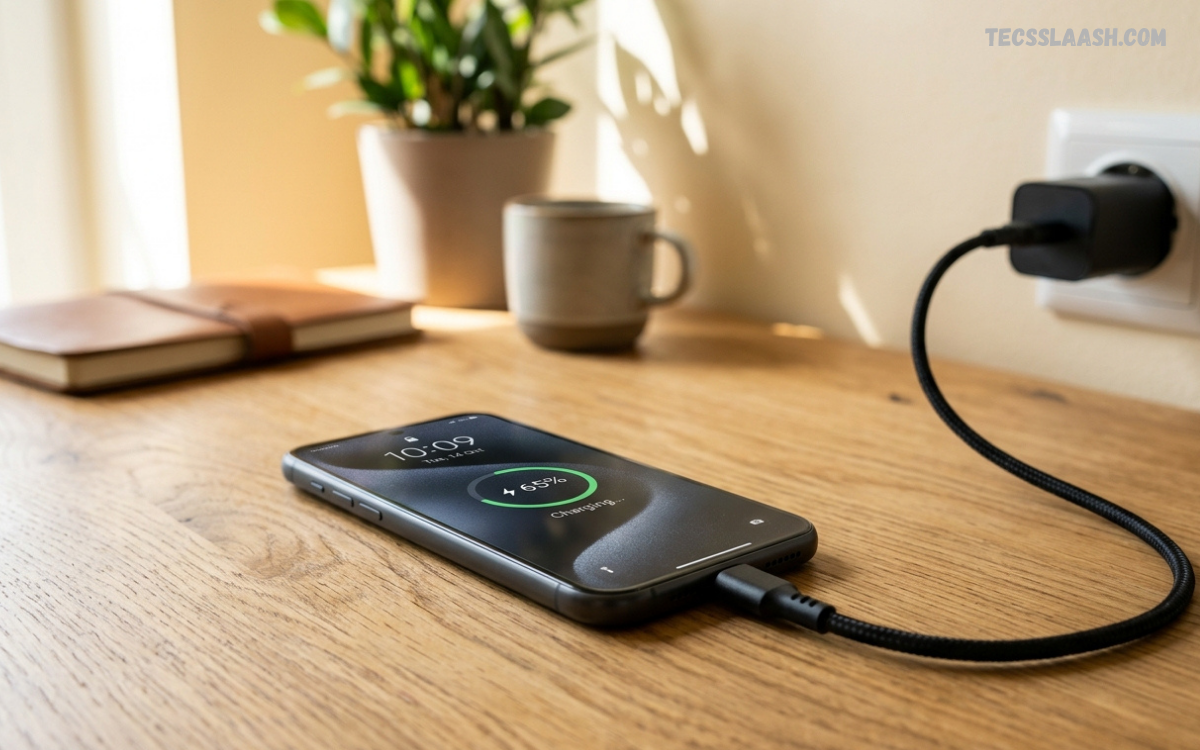
A reliable phone charger plays an important role in everyday smartphone use. Modern phones depend on efficient charging technology to maintain battery performance, support busy routines, and reduce charging time.
With so many charging products available, choosing the right one can be confusing. A professional approach focuses on device requirements rather than appearance or price alone.
What Is a Phone Charger?
A phone charger transfers electrical power to a smartphone battery. Chargers normally connect to a wall outlet, power bank, computer, or another compatible power source before delivering electricity through a cable or wireless charging system. Different chargers support different power levels and charging standards.
Modern charging systems can automatically communicate with compatible smartphones to determine an appropriate power level. This process helps optimize charging performance while protecting the device from excessive electrical stress.
Why Does Choosing the Right Phone Charger Matter?
Selecting the correct phone charger can improve charging efficiency and convenience. A compatible charger can provide suitable power for the smartphone while supporting the charging technology built into the device. An unsuitable or poor-quality charger may cause slower charging or inconsistent performance.
Charger selection also matters for long-term everyday reliability. Certified products from reputable manufacturers generally provide better protection against electrical problems and overheating.
Types of Phone Chargers
Wall chargers remain one of the most common charging solutions for smartphones. They connect directly to an electrical outlet and can provide stable power for regular charging. Many current models use USB-C ports and support fast-charging standards for compatible devices.
Wireless chargers provide another convenient option by transferring energy without requiring a charging cable connected directly to the phone. Compatibility depends on the smartphone and wireless charging standard. Wireless charging can be particularly useful for desks, bedside tables, and other locations where convenience matters.
USB-C Phone Charger
USB-C has become an important charging connector across modern consumer electronics. A USB-C phone charger can support different power levels depending on its design, charging protocol, cable, and connected device. The connector itself does not automatically guarantee fast charging.
When purchasing a USB-C charger, users should check supported power output and charging standards. A charger capable of higher wattage can offer faster charging when the smartphone supports the required technology. The cable must also be capable of handling the intended charging performance.
Fast Phone Charger
A fast phone charger is designed to deliver power at a higher rate than conventional charging solutions. Fast charging can reduce the time required to increase battery capacity, making it useful for users with demanding schedules. Actual charging speed depends on the phone, charger, cable, battery condition, and charging protocol.
Fast charging does not mean every phone will charge at the charger’s maximum advertised wattage. Smartphones regulate incoming power according to their hardware and supported standards. For this reason, checking the phone’s maximum supported charging specification is essential before purchasing a high-power charger.
Phone Charger Wattage Explained
Wattage represents the amount of electrical power a charger can provide under specified conditions. Higher wattage can support faster charging on compatible devices, but charger wattage alone does not determine actual charging speed. Voltage, current, charging protocol, cable capability, and device limitations also influence performance.
For example, a smartphone designed for a specific fast-charging level may not benefit from a substantially higher-wattage charger. The phone typically controls the power it accepts. Choosing a charger that meets or exceeds the phone’s supported requirements can provide flexibility without assuming maximum power will always be delivered.
Phone Charger Compatibility
Compatibility should be one of the first considerations when selecting a phone charger. Users should identify the phone’s charging connector, supported charging protocol, maximum charging speed, and recommended power requirements. These specifications can normally be found in official device documentation.
A compatible charger should work correctly with the phone and its charging cable. Some chargers support multiple charging standards, making them useful for households with several devices. However, broad compatibility should not replace checking the specific requirements of each smartphone.
Phone Charger and Charging Cable
A charger and cable work together as part of the charging system. A high-performance power adapter may not deliver its intended charging speed if the connected cable has limited capabilities. Cable quality therefore deserves the same attention as charger specifications.
Users should select cables designed for the required charging and data standards. Damaged, frayed, bent, or poorly manufactured cables should be replaced. Keeping cables in good condition can improve reliability and reduce charging interruptions during everyday use.
How Fast Charging Works
Fast charging generally increases the amount of electrical power delivered to a compatible smartphone during suitable charging conditions. The phone and charger communicate through supported charging protocols, allowing the device to request an appropriate power level. The charging system can then adjust output according to device requirements.
Charging speed can change throughout the charging cycle. A smartphone may accept higher power when the battery level is low and gradually reduce charging power as the battery approaches a high charge level. This behavior helps manage temperature, battery conditions, and charging efficiency.
Phone Charger Safety Features
Modern quality chargers may include protections designed to reduce electrical risks. Common protection technologies can include over-current protection, over-voltage protection, short-circuit protection, and temperature monitoring. These features contribute to safer operation when properly implemented.
Users should avoid extremely low-quality chargers with unclear specifications or questionable manufacturing standards. A reputable charger should provide clear information about its manufacturer, electrical ratings, compatibility, and safety certifications where applicable. Product documentation can help users verify whether a charger is suitable for their device.
Phone Charger Heat and Temperature
Some warmth during charging can be normal, particularly when using fast charging. However, unusual or excessive heat can indicate a problem with the charger, cable, outlet, battery, or charging environment. Users should pay attention to significant changes in charging behavior.
Keeping the phone and charger in a well-ventilated location can support better thermal management. Avoid covering charging equipment with blankets or other materials that restrict airflow. If a charger, cable, or phone becomes unusually hot, charging should be stopped and the equipment inspected.
Wireless Phone Charger
A wireless phone charger uses electromagnetic energy to transfer power between a charging pad or stand and a compatible smartphone. The technology eliminates the need to connect a cable directly to the phone during charging. Wireless charging offers convenience, although charging efficiency can vary by device and charger design.
Correct positioning can influence wireless charging performance. Misalignment between the phone and charging coil may reduce efficiency or interrupt charging. Cases, accessories, and foreign objects can also affect charging depending on the wireless charging system.
Phone Charger for Travel
Travel charging requires a balance between portability, compatibility, and charging performance. A compact charger can reduce luggage space while still providing sufficient power for a smartphone. Multi-port chargers can also help users charge multiple compatible devices from one power adapter.
Travelers should consider the electrical standards used at their destination. Plug shapes and voltage systems can differ between countries, making an appropriate travel adapter necessary in some locations. Checking destination requirements before travel helps prevent compatibility problems.
Multi-Port Phone Charger
A multi-port phone charger can power multiple devices from one adapter. This design is useful for users who regularly charge smartphones, tablets, headphones, smartwatches, or other compatible electronics. The total available power should be considered when multiple devices are connected simultaneously.
Not every port may provide identical charging performance. Some ports can support higher power output than others, while the charger may distribute available power dynamically. Checking the manufacturer’s specifications helps users understand how power is allocated between connected devices.
Phone Charger for Multiple Devices
Households with multiple smartphones can benefit from a charger that supports several devices. Instead of maintaining separate adapters for every phone, users can select a compatible multi-port solution. This can simplify cable management and reduce the number of adapters occupying electrical outlets.
Before purchasing a multi-device charger, users should calculate the approximate power requirements of connected devices. Smartphones with different charging standards may also require different cables. A versatile charger can be convenient when its ports and power output match the devices being used.
How to Choose a Phone Charger
Choosing a phone charger begins with identifying the smartphone’s charging requirements. Check the connector type, supported charging standard, maximum charging speed, and recommended power rating. These specifications provide a practical foundation for selecting a compatible charger.
Next, consider build quality, portability, number of ports, and safety features. Users who charge only one phone may prefer a compact single-port adapter, while households with several devices may benefit from a multi-port model. The ideal choice depends on actual charging needs rather than maximum specifications alone.
Phone Charger Power Delivery
USB Power Delivery, commonly known as USB PD, is a charging technology designed to negotiate power between compatible devices and chargers. USB PD can support different power levels depending on the equipment and implementation.
Compatibility remains important because USB PD support does not mean every device uses identical charging capabilities. A charger, cable, and smartphone must work together within their supported specifications. Checking manufacturer documentation can help confirm expected charging performance.
Read Also: Upcoming Movies 2026: Most Anticipated Films, Release Dates, Genres, and What to Expect
Phone Charger and Battery Health
Charging technology can influence everyday battery behavior, although modern smartphones contain battery-management systems designed to regulate charging. Battery temperature, charging patterns, battery age, and usage conditions all contribute to long-term battery performance.
Users can follow the manufacturer’s recommended charging practices and avoid exposing the device to excessive heat. Battery health features available on many smartphones can also help manage charging behavior. A suitable charger supports the phone’s designed charging system rather than forcing an unsupported power level.
Common Phone Charger Problems
Slow charging is one of the most common charger-related problems. Potential causes include a low-power adapter, unsuitable cable, damaged connector, background device activity, high temperature, or a charging standard mismatch. Testing the phone with a known-compatible charger and cable can help identify the source.
Intermittent charging can also result from loose connections, damaged cables, dirty charging ports, or unstable power sources. Users should inspect equipment carefully without forcing connectors into the phone. Persistent charging problems may require professional device inspection.
How to Maintain a Phone Charger
Proper maintenance can extend the practical life of a charger and cable. Store charging cables without sharp bends, avoid pulling cables by the wire, and keep connectors free from moisture and debris. Chargers should be stored in dry locations away from excessive heat.
Regular inspection can identify damage before it becomes a larger problem. Cracked housings, exposed wires, damaged plugs, unusual smells, or abnormal heating are signs that equipment should no longer be used. Replacing damaged charging accessories is safer than continuing to operate faulty equipment.
Phone Charger Buying Guide
A practical buying guide should begin with compatibility rather than brand popularity. Confirm the phone model, connector, charging protocol, and required power level before comparing products. This approach narrows the selection and prevents purchasing a charger that cannot provide the expected performance.
Price should also be considered alongside quality and specifications. The cheapest option may not provide the same construction quality or safety features as a reputable product. A well-specified charger designed for the intended device can provide better everyday reliability.
Phone Charger for Everyday Use
For everyday charging, reliability and convenience are usually more important than extreme power output. A suitable charger should provide enough power for the smartphone while fitting the user’s normal environment. A compact wall charger can work well for home, office, or bedside use.
Users who frequently move between locations may prefer a compact charger with multiple compatible ports. Cable length can also affect convenience, especially when charging near desks or beds. Selecting accessories based on daily habits can make charging simpler and more efficient.
Phone Charger vs Power Bank
A phone charger normally connects a smartphone to an external power source such as a wall outlet. A power bank stores electrical energy internally and allows a phone to be charged away from a traditional electrical outlet. Both serve different purposes within a smartphone charging setup.
A wall charger is generally useful for stationary charging, while a power bank provides portable backup power. Some users may benefit from having both options available. The appropriate choice depends on whether the priority is stationary charging, portability, or emergency power access.
Phone Charger for Office and Home
A dedicated charger at home or work can reduce the need to carry the same adapter throughout the day. Users can choose different charger designs depending on available space and the number of devices requiring power. Multi-port models can simplify charging for shared spaces.
Office charging setups may benefit from compact designs that minimize cable clutter. Home charging areas can prioritize convenience and accessibility. In both situations, compatible cables and suitable power output remain essential for dependable charging.
Future of Phone Charger Technology
Charging technology continues to evolve through improvements in power efficiency, compact charger design, wireless charging, and charging protocols. Manufacturers are also developing solutions that can support multiple devices from increasingly compact adapters. These developments are focused on improving convenience without requiring larger charging equipment.
Future charging systems are likely to emphasize compatibility and efficient power management. Universal connectors and broader charging standards can make it easier to use one charger across multiple compatible devices. Users should still verify device specifications because charging capabilities can vary between models.
Frequently Asked Questions
What Is a Phone Charger?
A phone charger is an accessory that supplies electrical power to a smartphone battery. Depending on the charger type, it can connect through a wall outlet, USB power source, power bank, or wireless charging system.
How Do I Choose the Right Phone Charger?
Check your phone’s supported connector, charging protocol, maximum charging speed, and recommended power requirements. Choose a reputable charger that meets those specifications and includes appropriate safety features.
Is a Higher-Watt Phone Charger Better?
A higher-watt charger is not automatically better for every phone. The smartphone controls how much power it accepts, so actual charging speed depends on the phone, charger, cable, and supported charging technology.
Can One Phone Charger Charge Multiple Devices?
Yes, a compatible multi-port charger can charge several devices simultaneously. However, the charger may distribute power across ports, so users should check the charger’s total output and individual port specifications.
Does a Fast Phone Charger Damage the Battery?
Compatible fast charging is designed to work within the smartphone’s charging system. Heat and charging conditions can affect battery performance over time, so using compatible equipment and following manufacturer guidance is important.
Is USB-C the Best Phone Charger Connector?
USB-C is widely used in modern smartphones and supports various charging technologies. However, connector suitability depends on the specific phone and its supported charging standards.
Why Is My Phone Charger Charging Slowly?
Slow charging can result from a low-power adapter, unsuitable cable, damaged charging port, high device temperature, background activity, or incompatible charging technology. Checking each component can help identify the cause.
How Long Does a Phone Charger Last?
Charger lifespan depends on construction quality, usage frequency, storage conditions, cable handling, and electrical conditions. Proper handling and replacing damaged equipment can help maintain reliable charging performance.
Conclusion
Choosing the right phone charger requires more than selecting the highest advertised wattage. Compatibility, charging standards, cable quality, safety features, power output, and intended usage all contribute to the overall charging experience.
A suitable charger should match the smartphone’s technical requirements while fitting the user’s daily routine. Whether the priority is fast charging, portability, wireless convenience, or multi-device support, checking specifications before purchasing remains the most practical approach.

