


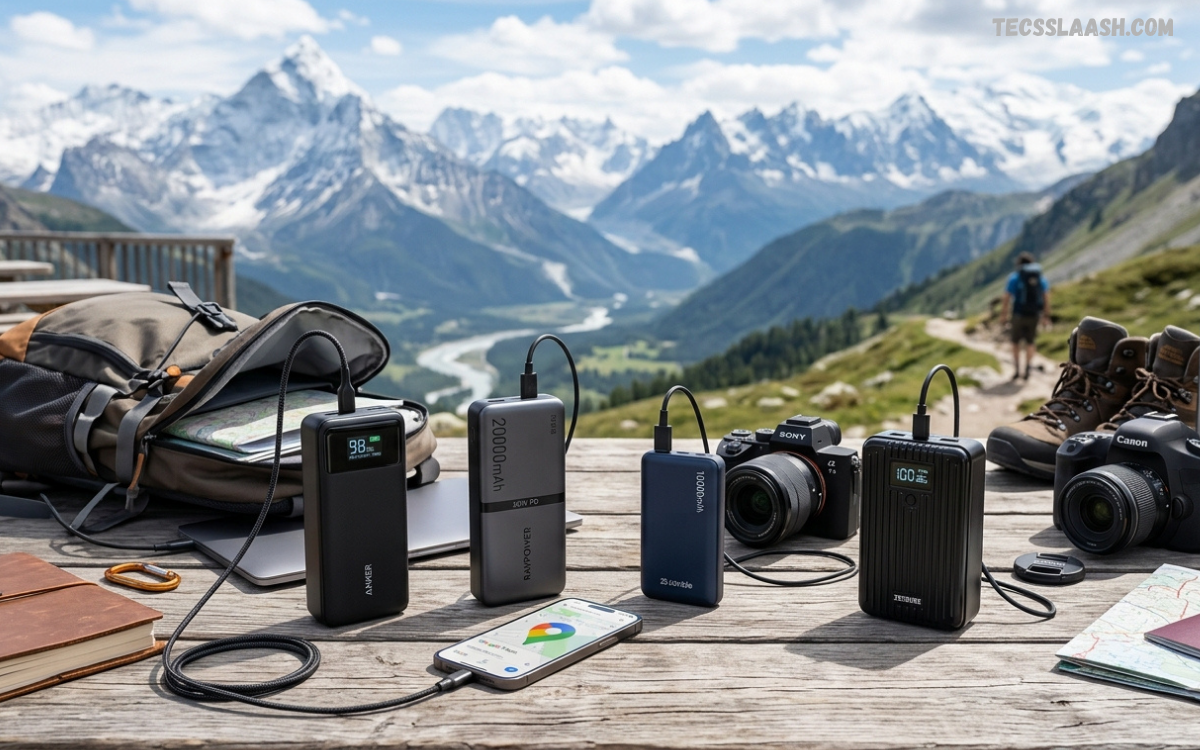
Travel often means spending long hours away from electrical outlets. Whether you are exploring a new city, taking a road trip, waiting at an airport, or hiking through remote areas, a reliable power bank can keep your smartphone and other devices running.
Choosing among the best power banks for travel depends on more than battery capacity. Charging speed, size, weight, ports, compatibility, safety features, and airline requirements can all affect your experience.
Why a Power Bank Is Essential for Travel
Modern travelers depend heavily on smartphones for navigation, digital tickets, hotel reservations, communication, photography, translation, and entertainment. A low battery can quickly become inconvenient when you are away from a wall outlet.
The Best Power Banks for Travel combine practical capacity with convenient portability. Instead of choosing the largest battery available, travelers should consider how many devices they carry and how frequently they can recharge the power bank itself.
What Makes the Best Power Banks for Travel?
A travel-friendly power bank should have a sensible combination of capacity, charging performance, portability, and durability. A compact model can be ideal for everyday sightseeing, while a higher-capacity option may be more suitable for longer journeys where charging opportunities are limited.
Charging technology also matters. USB-C has become increasingly useful because many modern smartphones, tablets, headphones, cameras, and other electronics use USB-C connections. Multiple output ports can also help when you need to charge more than one device during a trip.
Choosing the Right Battery Capacity
Power banks are commonly rated in milliamp-hours, or mAh. Smaller models may be convenient for emergency charging, while medium-capacity models can provide more substantial backup throughout the day. Your ideal capacity depends on your devices, travel duration, and access to electrical outlets.
A larger capacity does not automatically mean a better travel power bank. Bigger batteries generally require more physical space and weight. For frequent flights or city trips, a moderate-capacity model may offer a better balance between useful backup power and portability.
Compact Power Banks for Short Trips
Compact power banks are excellent for travelers who primarily need emergency charging. They can fit easily into a small backpack, handbag, jacket pocket, or travel organizer. Their lightweight design makes them convenient for sightseeing, shopping, commuting, and short day trips.
These models are especially useful when your phone usually lasts most of the day but occasionally needs additional power. Instead of carrying a heavy battery, you can choose a smaller unit designed to provide enough energy to get through the remainder of the day.
High-Capacity Power Banks for Long Journeys
Long-distance travel can create greater demand for portable power. A high-capacity power bank can provide additional charging opportunities when you are traveling between destinations, camping, or spending extended periods away from electrical outlets.
However, travelers should always check applicable airline requirements before packing a high-capacity power bank. Battery rules can vary by airline and jurisdiction, so checking current requirements before departure is an important part of travel preparation.
Fast Charging for Busy Travelers
Fast charging can make a major difference when you have only a short amount of time to recharge your phone. Instead of waiting for hours, compatible devices and chargers can restore useful battery power during a shorter break at an airport, café, hotel, or transportation terminal.
When evaluating charging performance, look beyond marketing terms such as “fast charging.” Check the actual output specifications and make sure they are compatible with your smartphone or other devices. A power bank with higher output is only beneficial when the connected device supports the relevant charging technology.
USB-C Power Banks for Modern Devices
USB-C power banks have become popular because the connector is widely used across current consumer electronics. Depending on the model, USB-C can support both input and output, allowing the same port to recharge the battery and power another device.
A USB-C power bank can reduce the number of cables required during travel. Before purchasing one, verify the supported charging standards, output levels, and cable compatibility. These specifications help determine whether the power bank will deliver the performance you expect.
Wireless Charging Power Banks
Wireless charging power banks offer an additional level of convenience for compatible smartphones. Instead of connecting a cable, you can position a supported device on the charging surface and begin charging without plugging in a traditional charging cable.
Wireless charging can be particularly convenient when you are moving between locations and want fewer cables in your travel bag. However, wired charging can often provide greater efficiency and flexibility, so travelers may prefer a power bank that supports both wireless and wired charging.
Power Banks With Multiple Ports
A traveler carrying a smartphone, earbuds, smartwatch, tablet, or other electronics may benefit from multiple charging ports. A multi-port power bank can allow several compatible devices to receive power without requiring separate batteries.
However, charging several devices simultaneously may affect the available output. The power bank’s specifications should clearly explain how power is distributed across its ports. Understanding this information can help you select a model that matches your daily travel setup.
Portable Power Banks for Smartphones
Smartphones are usually the most important device for travelers because they combine navigation, communication, photography, tickets, reservations, and online services. A portable power bank can therefore serve as a valuable backup when your phone battery starts running low.
For smartphone-focused travel, portability should remain a priority. A small or medium-sized model may provide enough backup energy without taking up much space. Travelers who use their phones heavily for video recording, navigation, or mobile data may prefer a larger capacity.
Power Banks for Tablets and Other Devices
Tablets can require substantially more energy than smartphones, especially when used for video, gaming, productivity, or navigation. Travelers carrying a tablet should check whether the power bank provides sufficient output and capacity for the device.
Some travelers also carry cameras, handheld gaming systems, wireless headphones, smartwatches, or other electronics. In this situation, selecting a versatile power bank with multiple ports and appropriate output can reduce the number of separate chargers needed in a travel bag.
Lightweight Design for Travelers
Weight becomes increasingly important when you spend hours carrying a backpack or walking through airports. A power bank that is technically powerful but unnecessarily heavy may become inconvenient during a long journey.
The Best Power Banks for Travel should offer a practical balance between capacity and weight. Consider how often you will carry the battery and whether your typical travel day requires a large energy reserve or simply emergency charging.
Safety Features to Look For
Safety should be an important consideration when choosing a portable battery. Quality power banks commonly include protection features designed to help manage conditions such as overcharging, overheating, short circuits, and excessive current.
Travelers should purchase power banks from reputable manufacturers and avoid suspiciously cheap products with unclear specifications. A reliable product should provide clear information about capacity, charging standards, input and output ratings, and applicable safety certifications.
Airline Travel and Power Bank Rules
Air travel introduces additional considerations because power banks contain rechargeable lithium batteries. Airlines and aviation authorities may have specific requirements concerning where portable batteries can be carried and what capacities are permitted.
Always check the latest rules from your airline before traveling. Requirements can change, and different airlines may apply their own procedures. Keeping the power bank accessible according to the airline’s instructions can also make security screening easier.
How to Choose a Travel Power Bank
Start by considering your main device. If you primarily need smartphone backup power, a compact model may be sufficient. If you carry several electronics, a higher-capacity option with multiple ports may be more appropriate.
Next, compare charging speed, physical dimensions, weight, port selection, cable compatibility, and safety features. Do not select a power bank based on mAh alone. The most useful option is the one that fits your actual travel habits.
Capacity vs. Portability
Capacity and portability often involve a trade-off. Increasing battery capacity generally means adding physical size and weight. For travelers, this makes it important to decide how much backup energy is genuinely necessary.
A person taking short city trips may prefer a compact power bank, while someone traveling for extended periods may value additional capacity. Thinking about your normal daily battery consumption can help you avoid carrying more battery than you need.
Charging Speed vs. Battery Size
Charging speed determines how quickly a compatible device can receive energy, while capacity determines how much total energy the power bank can store. Both specifications matter, but they solve different problems.
If you frequently have access to outlets, fast charging may be more valuable than maximum capacity. If you spend long periods away from electricity, additional capacity may become more useful. Your travel schedule should guide the decision.
Built-In Cables and Travel Convenience
Some modern power banks include built-in charging cables. This can make travel easier because you do not always need to carry a separate cable for basic charging.
Built-in cables can reduce clutter, but travelers should still check connector compatibility. If your devices use different connectors, a model with additional ports may provide greater flexibility.
Read Also: Money Heist Season 6: Will the Series Return? Here’s What We Know So Far
Digital Displays and Battery Indicators
A clear battery indicator helps you understand how much power remains. Basic power banks may use a series of LEDs, while advanced models can include digital displays showing a more precise remaining percentage.
This feature can be useful before leaving a hotel or airport. Knowing the remaining charge helps you decide whether the power bank needs to be recharged before the next part of your journey.
Durable Power Banks for Outdoor Travel
Travel does not always mean airports and hotels. Outdoor trips can expose electronics to dust, moisture, drops, and temperature changes. Travelers who spend time hiking or camping may therefore want a power bank with a durable exterior.
Some products are designed with additional protection against everyday impacts or environmental conditions. Even with a rugged design, it is wise to protect the power bank from unnecessary exposure to water and extreme temperatures.
Best Power Banks for Travel on a Budget
Budget-conscious travelers do not necessarily need to purchase the most expensive power bank. Many affordable models offer useful capacities, USB-C connectivity, multiple ports, and reasonable charging performance.
The important factor is avoiding products with questionable specifications. Compare capacity, output, safety information, warranty coverage, and customer support rather than choosing solely based on the lowest price.
Premium Travel Power Banks
Premium power banks often focus on faster charging, improved construction, multiple outputs, advanced displays, wireless charging, and better overall convenience. These features can be useful for travelers who regularly carry several expensive electronic devices.
A premium model can also reduce the need for separate accessories. However, travelers should still compare the specifications with their actual requirements. Paying for features you rarely use may not provide meaningful benefits.
Common Mistakes When Buying a Travel Power Bank
One common mistake is selecting a power bank based only on its advertised capacity. Travelers should also examine output power, charging standards, dimensions, weight, ports, and compatibility. A large battery with limited output may not provide the experience you expect.
Another mistake is ignoring travel regulations. A power bank that works perfectly at home may still require special handling during air travel. Checking airline requirements before departure can prevent avoidable problems at the airport.
How to Maintain a Power Bank
Proper storage can help preserve a power bank over time. Avoid leaving it in extremely hot or cold environments, especially inside a vehicle exposed to strong sunlight. Keep the device dry and inspect it regularly for visible damage.
Use compatible cables and chargers whenever possible. If the power bank becomes unusually hot, swollen, damaged, or otherwise abnormal, stop using it and follow appropriate battery-disposal guidance rather than continuing to charge or carry it.
Power Bank Charging Tips for Travelers
Before leaving for a trip, fully charge the power bank and confirm that its cables work correctly. It is also useful to charge your main devices before departure so the portable battery serves as backup rather than your primary power source.
During travel, avoid unnecessary battery drain by adjusting screen brightness, using power-saving settings, and disabling features you do not need. Combining efficient phone usage with a reliable power bank can extend your available battery time.
How Many Power Banks Should You Carry?
Most travelers can manage with one reliable power bank. Carrying multiple batteries may add unnecessary weight and complexity, especially when traveling by air and dealing with battery-related restrictions.
The right number depends on your devices, journey length, and access to electrical outlets. Instead of automatically carrying several units, choose one dependable power bank with sufficient capacity and compatible charging ports.
Best Power Banks for International Travel
International travelers should consider portability, charging compatibility, airline regulations, and plug adapters. The power bank itself generally provides portable energy, but you still need an appropriate wall charger to recharge it at your destination.
A USB-C charging system can simplify international travel because the same general cable ecosystem may support several devices. However, travelers should verify the charging requirements of their electronics and bring the necessary plug adapter for their destination.
Frequently Asked Questions
What is the best power bank for travel?
The best power banks for travel should offer a practical balance of capacity, charging speed, portability, and safety. A compact USB-C model can be suitable for everyday trips, while higher-capacity options may work better for longer journeys.
How much power bank capacity is best for travel?
A medium-capacity power bank is often a practical choice for travel because it can provide useful smartphone backup without adding excessive weight. Your ideal capacity depends on your device usage and access to charging outlets.
Are power banks allowed on airplanes?
Power banks are generally subject to airline and aviation battery rules. Travelers should check the latest requirements of their airline before departure and follow instructions regarding where portable batteries must be carried.
Is USB-C important in a travel power bank?
USB-C can be very useful because many modern smartphones, tablets, headphones, and other devices use USB-C connections. A power bank with USB-C input and output can also reduce the number of cables needed during travel.
Are high-capacity power banks better for travel?
Not always. Higher capacity provides more stored energy but can also increase size and weight. Travelers should choose a capacity that matches their devices and trip duration rather than automatically selecting the largest option.
Can a power bank charge multiple devices?
Yes, many power banks include multiple output ports and can charge several compatible devices. However, available power may be divided between connected devices, so check the manufacturer’s output specifications.
Should I choose a fast-charging power bank?
Fast charging can be valuable when you have limited time to recharge a device. Make sure both the power bank and your device support compatible charging standards to take advantage of faster charging.
What features should I check before buying a travel power bank?
Check capacity, output power, USB-C support, number of ports, size, weight, safety protections, battery indicators, durability, and warranty information. Airline requirements should also be considered before flying.
How should I store a power bank while traveling?
Keep the power bank in a dry, protected location away from extreme heat and physical damage. During air travel, follow your airline’s instructions for carrying portable batteries and avoid placing them where prohibited.
Can a power bank charge a laptop?
Some high-output power banks can charge compatible laptops through USB-C Power Delivery. Before purchasing, verify the laptop’s required charging wattage and confirm that the power bank supports sufficient output.
Conclusion
The best power banks for travel are not necessarily the biggest or most expensive models. The ideal choice depends on your devices, travel duration, charging habits, preferred portability, and airline requirements.
Before purchasing, compare capacity, charging speed, USB-C support, ports, size, weight, safety features, durability, and warranty information. With the right combination of features, a travel power bank can become one of the most useful accessories in your everyday travel kit.

