


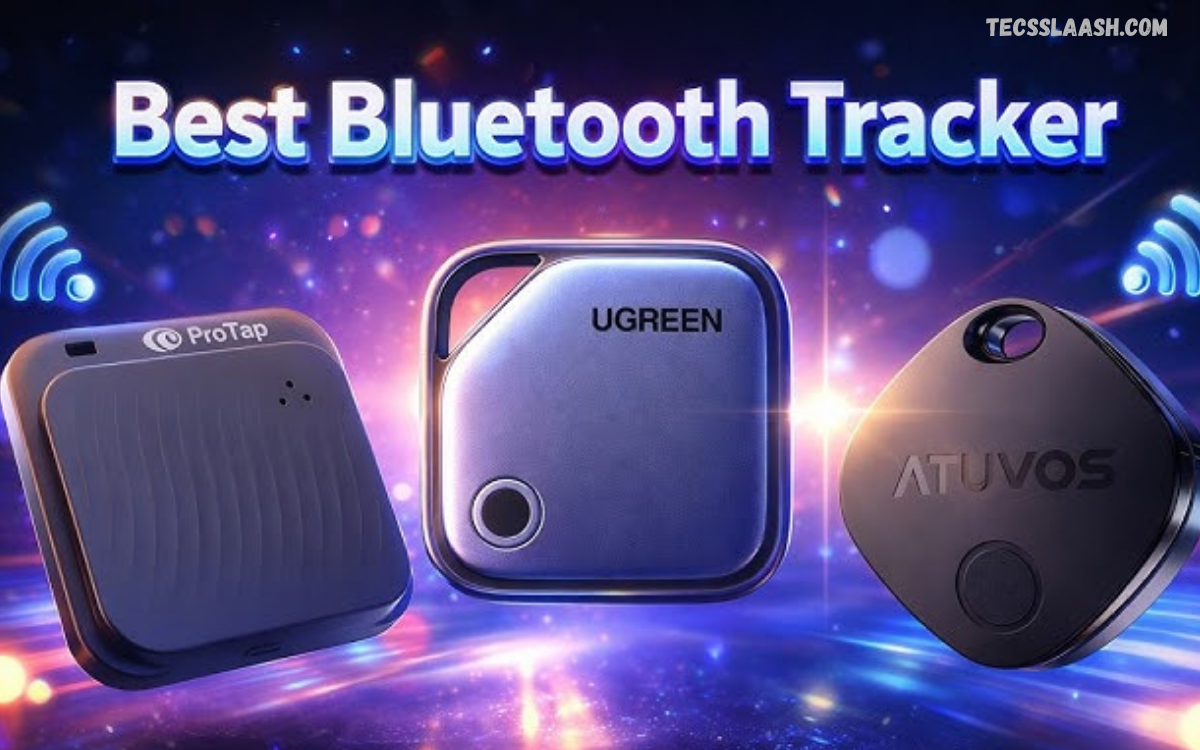
Losing keys, wallets, backpacks, luggage, or other everyday belongings can be frustrating, especially when you need them quickly. A Bluetooth Tracker can make finding misplaced items easier by connecting to a smartphone and using Bluetooth, sound alerts, and large device-finding networks.
Bluetooth trackers have become smaller, smarter, and more versatile in 2026, with options designed for iPhone, Android, Samsung Galaxy, and mixed-device households. Current models from Apple, Tile, Samsung, Chipolo, and Pebblebee offer different combinations of tracking networks, battery types, water resistance, range, and smart-finding features.
What Is a Bluetooth Tracker?
A Bluetooth tracker is a small electronic device designed to help locate everyday belongings that are easy to misplace. It connects with a compatible smartphone through Bluetooth and typically uses a companion application or a device-finding network to show the tracker’s last known location.
When the tracker is within Bluetooth range, users can normally activate an audible alert to help locate the attached item. When the item is farther away, participating smartphones in supported finding networks can help update its approximate location without requiring the tracker itself to have cellular connectivity.
Best Bluetooth Tracker Overall
There is no single tracker that is perfect for every smartphone user because finding networks are closely connected to device ecosystems. The strongest choice for one person may be an Apple AirTag, while a Samsung Galaxy owner may benefit more from Galaxy SmartTag2, and a mixed-device household may prefer a cross-platform model.
Current 2026 buying guides consistently emphasize choosing the tracking ecosystem before comparing specifications such as Bluetooth range or battery life. The network available around the lost item can have a larger practical effect on recovery than the maximum Bluetooth distance advertised on the packaging.
Apple AirTag 2
The Apple AirTag 2 is a strong choice for iPhone users who want seamless integration with Apple’s Find My ecosystem. Its compact design, Precision Finding support, replaceable battery, and broad Find My network make it particularly suitable for keys, luggage, backpacks, and other frequently carried items.
The second-generation AirTag was introduced in January 2026 and improves nearby finding capabilities compared with the previous generation. Apple also increased the audible alert volume and improved Precision Finding range, making the newer model a particularly attractive option for compatible iPhone users.
Samsung Galaxy SmartTag2
Samsung Galaxy SmartTag2 is designed primarily for compatible Samsung Galaxy smartphones and tablets. It works with Samsung’s SmartThings Find network and offers Bluetooth tracking, while compatible Galaxy devices can take advantage of UWB-based nearby finding features.
Its replaceable battery can provide long operating time, with Samsung-oriented sources reporting up to around 500 days under typical conditions. The IP67 rating also makes it suitable for many everyday environments where resistance to dust and water is useful.
Tile Pro
Tile Pro remains an attractive option for users who want a cross-platform tracker and already use the Tile or Life360 ecosystem. Its replaceable battery, loud alert, strong range, and compatibility with both Android and iPhone make it a versatile choice for keys, bags, luggage, and other possessions.
The Tile Pro is generally positioned as a premium Tile model with a longer claimed Bluetooth range than the standard Tile. Independent testing has found that real-world range can be lower than advertised, so users should treat manufacturer range figures as maximum conditions rather than guaranteed everyday performance.
Chipolo POP
Chipolo POP is an appealing choice for users seeking an affordable tracker that can work with either Apple Find My or Google’s Find Hub ecosystem. It offers a replaceable battery, audible alerts, and compatibility with both major mobile platforms, although one network must be selected during setup.
Its straightforward design makes it useful for keys, bags, luggage, and other objects that have enough space for a small key-fob-style tracker. The lower price can also make Chipolo POP practical for people who want several trackers for different belongings without choosing a premium model for every item.
Pebblebee Clip 5
Pebblebee Clip 5 is an excellent option for users who prefer a rechargeable tracker rather than regularly replacing disposable batteries. It can work with Apple Find My or Google Find Hub, making it particularly useful for households that want flexibility across smartphone ecosystems.
The Clip 5 offers USB-C-style rechargeable convenience and can provide roughly a year of operation per charge according to current comparison sources. Its rechargeable design reduces the need to purchase replacement coin-cell batteries, which may appeal to users who prefer simpler long-term maintenance.
Which Bluetooth Tracker Is Best for iPhone?
For iPhone users, Apple AirTag 2 is one of the most natural choices because it integrates directly with Apple’s Find My system. Precision Finding can provide more detailed nearby guidance on supported iPhone hardware, while the wider Find My network can assist when the tracker is no longer within direct Bluetooth range.
Cross-platform alternatives such as Chipolo and Pebblebee can also make sense when different people in a household use different operating systems. Before buying, iPhone users should check compatibility and decide whether they value Apple’s ecosystem integration or cross-platform flexibility more.
Which Bluetooth Tracker Is Best for Android?
Android users have several strong choices, but the best option depends on the phone manufacturer and preferred finding network. Samsung Galaxy owners may prefer SmartTag2, while users with compatible Android devices can consider Google Find Hub-compatible trackers such as Chipolo and Pebblebee models.
Motorola’s Moto Tag 2 is another notable Android-focused option in 2026, particularly for compatible devices that can take advantage of newer nearby-finding technology. The key consideration is whether the tracker works with the finding network and phone features you actually use.
Best Bluetooth Tracker for Keys
Keys are one of the easiest items to pair with a Bluetooth tracker because most key-oriented models include an attachment point or can be connected through a suitable holder. A compact tracker with a loud speaker, dependable application, and strong finding network is generally more useful than a model that simply advertises the longest theoretical range.
Tile, Chipolo, AirTag, and Pebblebee all offer suitable options for key tracking, although compatibility differs between ecosystems. For mixed Android and iPhone households, cross-platform models can reduce compatibility concerns and make it easier to manage multiple trackers.
Best Bluetooth Tracker for Wallets
Wallets require a slimmer design than keychains, making card-shaped trackers especially useful. Pebblebee Card and Chipolo CARD products are designed around wallet-friendly dimensions and rechargeable or replaceable-power options depending on the model.
A wallet tracker should be thin enough to avoid making the wallet uncomfortable while still providing reliable Bluetooth connectivity and an audible alert. Users should also check battery life because a tracker with a longer charging interval can require less maintenance over time.
Best Bluetooth Tracker for Luggage
Luggage tracking is one of the most practical uses for Bluetooth trackers because bags can become separated from their owners during travel. A tracker connected to a large finding network can potentially provide a location update when another compatible smartphone detects the device.
For luggage, water resistance, battery life, attachment security, and ecosystem coverage are important considerations. A compact tracker should be placed securely inside or on the luggage so it remains with the bag throughout transportation.
Bluetooth Range Explained
Bluetooth range refers to the approximate distance at which a phone can communicate directly with the tracker. Advertised ranges can vary significantly depending on the model, environment, obstacles, interference, phone hardware, and testing conditions.
Real-world performance can be considerably different from maximum manufacturer claims because walls, buildings, vehicles, crowded areas, and other wireless devices can affect Bluetooth communication. Independent testing of current trackers has shown that advertised range should be viewed as a reference rather than a guarantee.
Battery Life and Charging
Battery life is another major factor when selecting the Best Bluetooth Tracker. Some trackers use replaceable coin-cell batteries, while rechargeable models can be charged through USB-C or wireless charging depending on the design.
Replaceable batteries can be convenient because users can quickly install a new battery when required. Rechargeable models eliminate regular battery purchases but require periodic charging, so the better option depends on whether convenience means quick replacement or fewer disposable batteries.
Water and Dust Resistance
Water and dust resistance can make a Bluetooth tracker more practical for everyday use. People commonly attach trackers to keys, bags, luggage, bicycles, and outdoor equipment, where accidental exposure to moisture or dust can occur.
IP ratings provide useful information about resistance levels, but users should still follow the manufacturer’s instructions. Current models vary significantly, with examples ranging from IP55 and IP66 to IP67 and IP68 depending on the tracker.
Read Also: Best Wi-Fi Extender: Complete Guide to Better Home Internet Coverage
Privacy and Safety Features
Bluetooth trackers provide useful recovery features, but privacy and unwanted-tracking protections are equally important. Modern ecosystems have introduced alerts designed to notify people when an unknown tracker appears to be traveling with them.
Users should understand that Bluetooth trackers are designed to locate belongings, not secretly monitor people. Choosing a reputable tracker with established privacy protections and keeping the associated smartphone software updated can help provide a safer tracking experience.
How to Choose the Best Bluetooth Tracker
Start by checking your smartphone ecosystem because compatibility can immediately eliminate certain options. iPhone users can prioritize Find My-compatible devices, Samsung Galaxy users can consider SmartThings Find products, while other Android users may prefer Google Find Hub-compatible trackers.
Next, consider the item you want to track and select an appropriate physical design. Keychain trackers are suitable for keys and bags, while slim card-shaped models are better for wallets, and rechargeable designs can be useful for users who want to minimize battery replacements.
Bluetooth Tracker vs GPS Tracker
Bluetooth trackers and GPS trackers are designed for different purposes. A Bluetooth tracker is primarily intended for locating nearby or misplaced belongings through Bluetooth communication and crowdsourced finding networks, while GPS-based systems can provide location information using satellite and cellular technologies.
For everyday objects such as keys, wallets, luggage, and backpacks, Bluetooth trackers are often simpler and more affordable. For applications requiring continuous remote location information, a dedicated GPS or cellular solution may be more appropriate.
Frequently Asked Questions
What is the Best Bluetooth Tracker in 2026?
The Best Bluetooth Tracker depends on your smartphone and preferred ecosystem. AirTag 2 is a strong choice for iPhone users, while Galaxy SmartTag2 is well suited to Samsung Galaxy devices.
Do Bluetooth Trackers Work Without Internet?
Bluetooth trackers can communicate directly with a nearby phone through Bluetooth without an internet connection. Remote location updates generally depend on the tracker’s supported finding network and participating devices.
Which Bluetooth Tracker Is Best for Android?
Android users can choose from several options, including Samsung Galaxy SmartTag2, Chipolo POP, Pebblebee Clip 5, and compatible Google Find Hub trackers. Samsung Galaxy users may benefit most from SmartTag2 integration.
Which Bluetooth Tracker Is Best for iPhone?
Apple AirTag 2 is a leading option for iPhone users because it integrates with Apple’s Find My network and supports Precision Finding on compatible devices.
Can a Bluetooth Tracker Track Luggage?
Yes, Bluetooth trackers are commonly used for luggage. A compatible finding network can help provide an updated location when the luggage is separated from the owner’s smartphone.
How Long Does a Bluetooth Tracker Battery Last?
Battery life varies by model, battery type, usage, and settings. Some trackers use replaceable batteries lasting many months, while rechargeable models may operate for extended periods between charges.
Are Bluetooth Trackers Waterproof?
Some Bluetooth trackers have water- and dust-resistance ratings, but protection levels vary between models. Check the manufacturer’s IP rating before using a tracker in wet or outdoor conditions.
How Far Can a Bluetooth Tracker Work?
Bluetooth range depends on the tracker, smartphone, surroundings, interference, and physical obstacles. Manufacturer range figures represent ideal conditions and may differ from real-world performance.
Can I Use One Bluetooth Tracker With Multiple Phones?
Some trackers can be shared with other users or accounts through their respective ecosystems. The exact sharing process and number of supported users depend on the tracker and its companion application.
Are Bluetooth Trackers Safe to Use?
Bluetooth trackers are designed primarily for locating belongings, and major tracking ecosystems include features intended to help detect unwanted tracking. Users should choose reputable products and keep their tracker and smartphone software updated.
Conclusion
The Best Bluetooth Tracker depends on your smartphone, preferred ecosystem, target item, battery preferences, and required features. Apple AirTag 2 is a strong iPhone-focused choice, Samsung Galaxy SmartTag2 is well suited to compatible Galaxy users, Tile Pro offers a strong cross-platform option, while Chipolo POP and Pebblebee Clip 5 provide useful alternatives for users who value flexibility.
Rather than choosing a tracker solely because it advertises the longest range, focus on the finding network, smartphone compatibility, battery design, durability, privacy features, and physical size. Selecting a tracker that matches your everyday needs can make lost keys, wallets, luggage, and other belongings much easier to locate when they go missing.

