


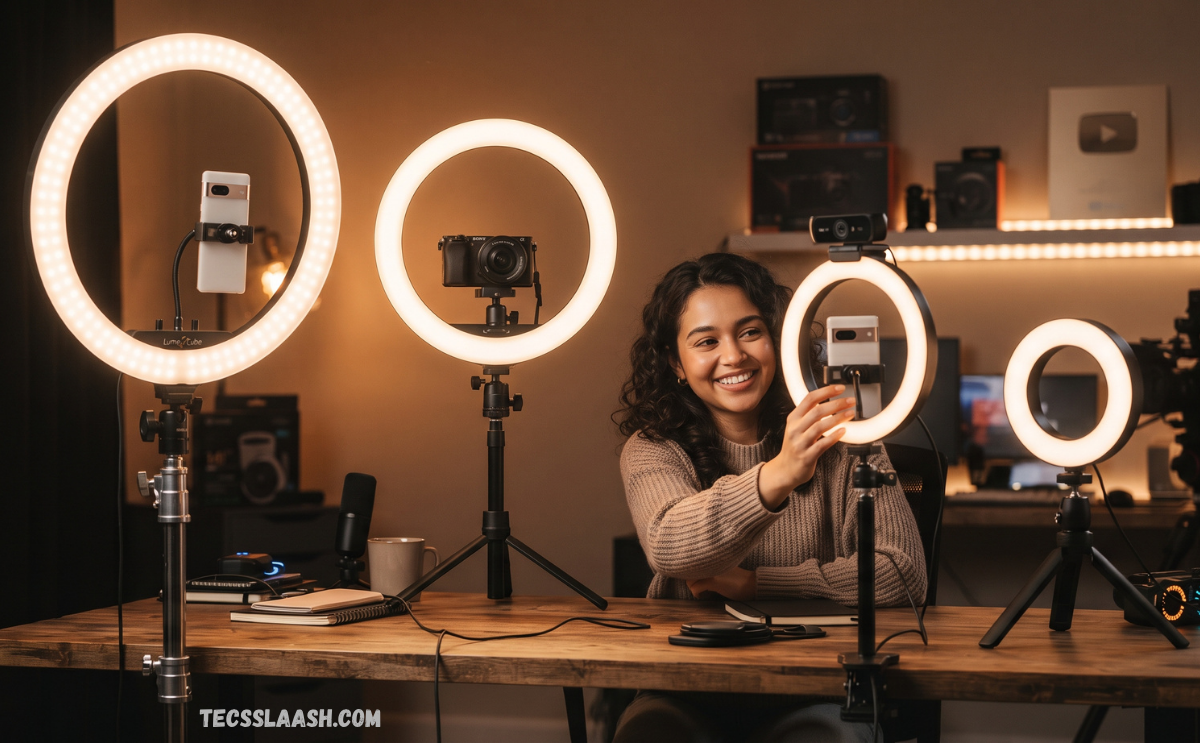
The best ring lights help creators achieve bright, balanced, professional-looking lighting without complex studio equipment. Whether you create YouTube videos, TikTok clips, Instagram Reels, product reviews, tutorials, or live streams, proper lighting improves camera quality, reduces harsh shadows, and makes every scene look cleaner.
Modern ring lights offer adjustable brightness, multiple color temperatures, flexible mounts, smartphone holders, USB connectivity, and remote controls. Choosing the right model depends on your recording environment, camera setup, working distance, and content style. A high-quality ring light can transform ordinary home recordings into polished visual content.
Why Are Ring Lights Important?
Lighting remains one of the most important elements of photography and video production. Even an expensive camera can produce disappointing results under poor lighting, while a basic smartphone can capture impressive footage with balanced illumination. Ring lights provide direct, even lighting around the subject.
Their circular design creates soft facial illumination and reduces strong shadows around the nose, eyes, and jawline. This makes them especially useful for beauty content, portraits, tutorials, online meetings, and livestreaming. Many creators consider ring lighting an affordable way to improve production quality quickly.
How Do Ring Lights Work?
A ring light contains LED bulbs arranged in a circular shape around an opening. A camera or smartphone can often sit inside this opening, allowing light to surround the lens. This position directs illumination evenly toward the subject and creates a distinctive circular catchlight in the eyes.
Most LED ring lights allow brightness adjustment and color temperature control. Users can select warm, neutral, or cool lighting depending on the environment and desired appearance. Advanced models provide precise Kelvin settings, making it easier to match existing room lights or create consistent visual results.
Key Features of the Best Ring Lights
The best ring lights combine useful controls, reliable construction, strong illumination, and flexible mounting options. Before purchasing, buyers should compare brightness output, size, power source, color accuracy, and compatibility. These features directly affect convenience and final image quality.
Some users need a compact desktop model, while others require a large studio ring light with professional stands. Understanding each feature prevents unnecessary spending and helps match the lighting system with specific creative requirements. A well-chosen model can remain useful for years.
Brightness and Light Output
Brightness determines how strongly a ring light illuminates the subject. Larger ring lights generally produce more powerful illumination, although LED quality and design also influence output. Adjustable brightness is essential because maximum power is not always suitable for every recording situation.
Look for models offering smooth dimming rather than limited brightness levels. This allows precise control during makeup tutorials, portrait photography, product videos, and livestreams. A flexible brightness range also makes the ring light useful in dark rooms and naturally lit spaces.
Adjustable Color Temperature
Color temperature affects whether light appears warm, neutral, or cool. Warm lighting creates a softer golden appearance, while cool lighting produces a brighter white-blue tone. Neutral lighting often works well for natural-looking skin tones and general video production.
The best ring lights provide adjustable color temperatures instead of fixed lighting modes. This flexibility helps creators match daylight, indoor bulbs, and other studio lights. Precise temperature control also improves consistency when recording content across different locations or times of day.
Ring Light Size and Diameter
Ring light size affects coverage, portability, and lighting softness. Small models are convenient for desks, laptops, smartphones, and travel. Larger models provide wider illumination and work better for full-face recordings, standing videos, portraits, and professional content production.
A larger diameter generally creates softer light because the illuminated surface covers more area. However, bigger models require more space and stronger stands. Consider your recording location carefully before choosing between compact, medium, and large ring lights.
Best Ring Lights for YouTube Videos
YouTube creators often need consistent lighting for long-form videos, tutorials, interviews, reviews, and educational content. A medium or large adjustable ring light can provide reliable front lighting while reducing uneven shadows. Stable color temperature settings help maintain visual consistency across multiple recordings.
For serious YouTube production, choose a model with a strong stand and flexible brightness controls. Smartphone and camera mounting support can simplify setup, especially for solo creators. Combining a ring light with additional background lighting can create a more professional studio appearance.
Best Ring Lights for TikTok and Reels
Short-form video creators usually benefit from portable and fast setup equipment. Compact ring lights with smartphone holders work well for TikTok, Instagram Reels, and YouTube Shorts. Quick brightness adjustments allow creators to react easily to changing room conditions and creative concepts.
A lightweight design becomes especially useful for creators recording in different rooms or traveling frequently. Bluetooth remote controls can also help when recording alone. The best ring lights for short videos balance portability, strong lighting, and easy smartphone positioning.
Best Ring Lights for Makeup Artists
Makeup artists need lighting that displays colors accurately and reveals fine facial details. Poor lighting can make foundation shades, contouring, lipstick, and eye makeup appear different from their real appearance. High-quality LED ring lights provide even front lighting for detailed beauty work.
Color accuracy should receive special attention when selecting a ring light for professional makeup. Adjustable temperature settings also allow artists to evaluate how makeup may appear under daylight or warmer indoor lighting. A stable stand helps maintain consistent illumination throughout long sessions.
Best Ring Lights for Photography
Portrait photographers often use ring lights to create soft frontal illumination and recognizable circular catchlights. Ring lighting can produce a clean beauty-style appearance, particularly when positioned close to the camera lens. It also works well for close-up portraits and social media photography.
Photographers should consider brightness, color accuracy, power options, and mounting compatibility. Some photography ring lights support dedicated cameras, while others focus primarily on smartphones. Professional users may prefer larger models capable of delivering stronger, more controlled illumination.
Best Ring Lights for Live Streaming
Live streaming requires reliable lighting because viewers watch content continuously in real time. Sudden exposure changes, harsh shadows, or dark facial areas can reduce overall production quality. An adjustable ring light helps streamers maintain a clear and visible appearance throughout broadcasts.
Gamers, podcasters, educators, and online presenters can benefit from compact or medium-sized ring lights. Choose a stable model that remains comfortable during long sessions. USB-powered options may offer convenient desk use, while larger AC-powered units provide stronger output.
Best Ring Lights for Video Calls
Ring lights can improve the appearance of video calls by brightening the face and reducing shadows caused by overhead room lighting. Small clip-on models are particularly useful for laptops and desktop computers. They require minimal space and can often connect through USB power.
For remote workers, consultants, teachers, and online professionals, subtle lighting usually produces the best results. Extremely bright settings may look unnatural during meetings. Adjustable brightness and color temperature make it easier to create a clean, professional appearance without excessive glare.
Best Ring Lights for Product Photography
Product photography requires controlled lighting that clearly displays shapes, colors, textures, and small details. Ring lights can reduce shadows around smaller products and provide direct illumination for cosmetics, accessories, electronics, and other items. They are especially useful for close-up photography.
However, reflective surfaces may show the circular light source as a visible reflection. Experimenting with distance and angles can reduce this issue. Adjustable brightness helps photographers control highlights and preserve important details without creating excessively bright areas.
Best Ring Lights for Smartphones
Smartphone content creation continues growing because modern mobile cameras offer strong video and photography capabilities. A good ring light can enhance smartphone footage by providing consistent illumination. Many models include adjustable phone holders designed for portrait and landscape recording.
Check holder width and stability before purchasing because larger smartphones may require stronger support. Flexible positioning also matters for different content formats. The best smartphone ring lights allow quick rotation, secure mounting, and simple adjustments without interrupting the recording process.
Read Also: Best Android Apps for 2026
Tripod Quality and Stability
A powerful ring light becomes less useful when paired with a weak or unstable tripod. Poor stands may shake during recording, tilt unexpectedly, or fail to support heavier equipment. Stability is particularly important when using larger ring lights with cameras, phones, or additional accessories.
Look for durable legs, secure height locks, and a reliable center support structure. Adjustable height provides greater flexibility for seated tutorials, standing videos, and full-body content. A strong tripod can also improve safety by reducing the risk of expensive equipment falling.
Power Source and Portability
Ring lights use different power systems, including USB, rechargeable batteries, and direct AC power. USB models are convenient for laptops, power banks, and desktop use. Battery-powered lights offer greater portability, making them useful for outdoor shoots and travel.
AC-powered models often provide stronger and more consistent illumination for studio environments. Consider where you plan to use the light most frequently before selecting a power system. The best option balances output, convenience, and mobility according to your regular workflow.
Remote Controls and Smart Features
Remote controls allow users to change brightness and color temperature without touching the light directly. This feature becomes valuable during solo recordings because creators can make adjustments while remaining in position. Bluetooth controls may also support remote smartphone photography and video recording.
Some advanced lighting systems include smartphone applications and wireless controls. These features can simplify multi-light setups and save time during production. Although smart features are useful, basic reliability and light quality should remain more important than unnecessary technical extras.
Color Rendering and Natural Skin Tones
Color rendering measures how accurately a light source displays colors compared with natural or reference lighting. Better color quality helps skin tones, clothing, cosmetics, and products appear more realistic on camera. This feature becomes especially important for beauty creators and professional photographers.
A ring light with poor color rendering may create unnatural colors or require extra editing after recording. When comparing the best ring lights, prioritize models designed for accurate and consistent color output. Good lighting can reduce editing time and improve the final visual presentation.
Choosing the Right Ring Light Brightness
More brightness does not automatically mean better results. Excessive illumination can flatten facial features, create strong reflections, and make skin appear unnaturally pale. The ideal brightness depends on camera sensitivity, subject distance, room lighting, and the creative style of the content.
Start with moderate brightness and adjust gradually while checking the camera preview. Position the ring light at a suitable distance instead of relying only on maximum power. This approach provides better control and helps create balanced lighting with natural-looking results.
Choosing the Right Color Temperature
Color temperature should match your environment and desired visual style. Daylight-style lighting can work well for clean, natural content, while warmer settings may create a comfortable and softer atmosphere. Mixing incompatible light temperatures can produce inconsistent colors.
If your room contains windows, ceiling lights, or lamps, observe how these sources affect the subject. Adjust the ring light to complement existing illumination when possible. For consistent professional videos, controlling or reducing unwanted ambient light can simplify color management.
Proper Ring Light Placement
Correct placement can make a major difference in lighting quality. For beauty videos and direct-to-camera content, positioning the ring light close to the camera often creates even facial illumination. The center opening allows the lens to capture the subject from the same direction as the light.
Slightly raising or lowering the light can change facial shadows and overall appearance. Experiment with height and distance before beginning an important recording session. Small adjustments may improve comfort, reduce glare, and create more flattering results for different face shapes.
Ring Light Distance From the Subject
Distance affects brightness and softness. Moving the ring light closer increases illumination and makes the light source appear larger relative to the subject. Moving it farther away reduces intensity and can create more visible shadows, depending on the surrounding environment.
A close position works well for beauty content and head-and-shoulders videos, while wider scenes may require greater distance or larger lighting equipment. Test different positions while monitoring your camera screen. The best setup provides even coverage without distracting reflections or overexposure.
Ring Lights Compared With Softboxes
Ring lights and softboxes both provide useful artificial lighting, but they create different visual results. A ring light produces direct, symmetrical illumination and distinctive circular eye reflections. Softboxes create broad, diffused lighting that often looks softer across larger areas.
For direct-to-camera creators, ring lights offer convenience and fast setup. Softboxes may provide greater flexibility for interviews, cinematic videos, and wider studio scenes. Many professional creators use both systems together to achieve balanced key lighting and additional facial illumination.
Ring Lights Compared With LED Panels
LED panels offer directional lighting and can illuminate larger scenes from different angles. Ring lights focus primarily on centered frontal lighting and are especially useful for faces, beauty work, and close-up content. Each option serves different production requirements.
LED panels may work better for dramatic lighting arrangements and larger recording spaces. Ring lights remain easier for beginners because their circular design naturally encourages camera-centered placement. Choosing between them depends on whether you prioritize simplicity or greater lighting control.
Common Ring Light Mistakes to Avoid
One common mistake involves placing the ring light too close at maximum brightness. This can create overexposure, strong reflections, and uncomfortable heat or eye strain. Another mistake involves ignoring mixed lighting, which can cause strange color differences across the face and background.
Creators should also avoid weak tripods, poorly secured smartphone mounts, and unstable recording surfaces. Taking a few minutes to test the complete setup can prevent problems during filming. Reviewing camera exposure before recording helps identify shadows, glare, and unwanted color shifts.
How to Set Up a Ring Light Professionally
Begin by placing the ring light on a stable surface and extending the tripod securely. Position the camera or smartphone near the center of the ring when the design allows it. Adjust the height until the light provides flattering and even illumination across the subject.
Next, choose a suitable color temperature and begin with medium brightness. Check the camera preview, then adjust brightness, distance, and angle gradually. Keep the setup consistent for recurring content so future videos maintain a recognizable professional visual style.
Maintaining Your Ring Light
Regular maintenance can extend the lifespan of your lighting equipment. Clean the outer surface carefully to remove dust that may reduce brightness or affect appearance. Avoid exposing electrical components to moisture, and disconnect the unit properly when storing it for long periods.
Inspect cables, adapters, mounts, and tripod locks occasionally for signs of damage. Store portable models in protective cases when traveling. Proper handling reduces the risk of broken components and helps ensure dependable performance during important photography or video projects.
Ring Lights for Beginners
Beginners do not always need expensive studio equipment. A reliable adjustable ring light with a stable tripod and secure smartphone holder can provide significant improvements over ordinary room lighting. Focus first on learning placement, brightness control, and color temperature selection.
As content production grows, additional equipment can be added according to specific requirements. Starting with simple lighting also makes it easier to understand how illumination affects video and photography. The best ring lights for beginners offer straightforward controls and dependable everyday performance.
Professional Ring Light Buying Considerations
Professional users should evaluate build quality, output consistency, color accuracy, power reliability, and mounting flexibility. Cheap equipment may appear attractive initially but can become unreliable during frequent production. Durable components become increasingly important for photographers and creators working regularly.
Consider the complete workflow rather than focusing only on ring diameter or advertised brightness. Camera compatibility, studio space, travel requirements, and content format all influence the ideal choice. A professional lighting purchase should support both current projects and future creative growth.
Budget Ring Lights Versus Premium Models
Budget ring lights can provide useful results for casual videos, online meetings, and beginner content creation. They often include basic brightness controls, smartphone holders, and compact tripods. However, construction quality and long-term reliability may vary between lower-priced options.
Premium models generally offer stronger materials, improved color accuracy, smoother dimming, and more reliable power systems. The correct choice depends on how frequently you create content. Investing more can make sense when lighting plays a central role in professional photography or video production.
Are Large Ring Lights Always Better?
Large ring lights provide broader coverage and can create softer illumination, but they are not automatically better for every situation. A large model may occupy too much space on a small desk or become inconvenient during travel. Compact models can perform extremely well for close-up content.
Choose size according to your recording distance and subject area. A small light may be sufficient for laptop calls, while larger setups work better for standing videos and studio photography. The best ring lights match practical needs rather than simply offering the biggest diameter.
Frequently Asked Questions
What is the best ring light for content creation?
The best ring light for content creation should offer adjustable brightness, color temperature control, good color accuracy, and a stable stand. Choose the size based on your recording setup and lighting requirements.
What size ring light is best?
A 10 to 12-inch ring light is suitable for video calls, selfies, and desk setups. Larger 14 to 18-inch ring lights provide wider, softer lighting for YouTube videos, streaming, makeup tutorials, and professional content creation.
Are ring lights good for YouTube videos?
Yes, ring lights can provide soft and even facial lighting for YouTube videos. They help reduce harsh shadows and improve visibility, creating a cleaner and more professional appearance on camera.
Can I use a ring light with my smartphone?
Yes, many ring lights include smartphone holders or adjustable mounts. They are useful for recording videos, taking photos, live streaming, creating social media content, and participating in video calls.
Are ring lights worth buying?
Ring lights are worth buying for content creators, vloggers, streamers, photographers, makeup artists, and remote workers. They provide controlled lighting without requiring a complicated studio setup.
What is the best color temperature for a ring light?
The best color temperature depends on the surrounding lighting and the desired visual style. Adjustable ring lights allow you to select warmer or cooler tones and match the light to your recording environment.
Can a ring light improve video call quality?
Yes, a ring light can improve your appearance during video calls by illuminating your face evenly. Better lighting can reduce dark shadows and help the camera capture clearer facial details.
How far should a ring light be from my face?
The ideal distance depends on the ring light size and brightness level. Position the light far enough away to create even illumination without making your face appear overly bright or washed out.
What is better: a ring light or an LED panel?
Ring lights are excellent for close-up videos, selfies, beauty content, and face-to-camera recording. LED panels provide more directional lighting and may offer greater flexibility for larger scenes and professional setups.
What features should I look for in the best ring lights?
Look for adjustable brightness, adjustable color temperature, high color accuracy, suitable size, reliable power options, smartphone or camera compatibility, and a strong, stable stand.
Conclusion
The best ring lights can improve video quality, photography, livestreams, makeup tutorials, product content, and professional video calls. Important factors include adjustable brightness, color temperature, size, color accuracy, power source, stability, and compatibility with your camera or smartphone.
Before buying, consider where you record, what type of content you create, and how often you use lighting equipment. A carefully selected ring light provides consistent illumination, simplifies production, and helps create cleaner, more professional visual content for almost any creative purpose.

