


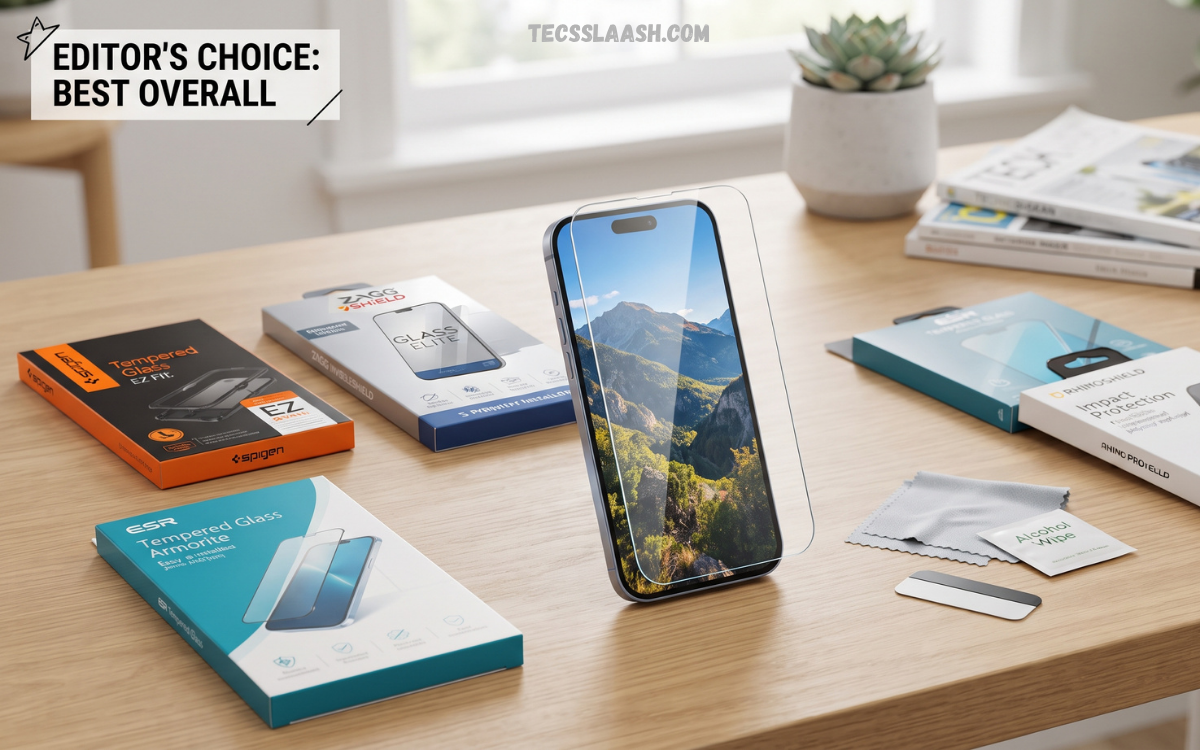
Choosing the Best Screen Protectors for Smartphones can significantly improve everyday phone protection. Modern smartphones feature premium displays with advanced glass, vibrant colors, high refresh rates, and responsive touch technology. Despite stronger display materials, scratches, cracks, fingerprints, and impact damage remain common concerns.
The right protector should provide strong scratch resistance, reliable impact protection, excellent transparency, smooth touch response, and comfortable edge coverage. Current buying guides commonly recommend tempered glass for most standard smartphones because it combines durability with a glass-like feel.
Why Do Screen Protectors Matter?
A smartphone screen is constantly in contact with fingers, pockets, bags, desks, keys, dust, and accidental impacts. Even when the original display glass has strong scratch resistance, repeated contact with abrasive particles can create small marks that become visible under bright lighting. A protector provides a replaceable surface that absorbs much of this daily wear.
Screen protectors also help preserve the appearance and resale condition of a smartphone. Replacing a protector is considerably simpler than repairing a damaged display. A quality protector cannot guarantee that a screen will never crack, but it can add another layer of protection against scratches, minor impacts, and everyday handling.
Tempered Glass Screen Protectors
Tempered glass remains the most popular choice for users seeking a balance between protection, clarity, and usability. The material provides a rigid surface that feels similar to the smartphone’s original display. Quality tempered glass normally includes an oleophobic coating that helps reduce fingerprints while maintaining smooth finger movement.
Another advantage involves impact behavior. Tempered glass can absorb part of an impact and may crack when subjected to significant force, potentially protecting the display underneath. Thickness typically ranges from 0.2mm to 0.5mm, with 0.3mm to 0.33mm providing a practical balance between protection and minimal bulk.
PET Film Screen Protectors
PET film provides a thin and lightweight alternative to tempered glass. Polyethylene terephthalate film focuses primarily on scratch protection rather than serious impact protection. Its flexible construction makes installation possible on certain displays where rigid glass may struggle to maintain full coverage.
PET protectors can suit budget-conscious users, older smartphones, or devices requiring an extremely thin protective layer. However, PET generally offers less impact resistance and a less glass-like touch experience than premium tempered glass. Users who frequently drop their smartphones should normally consider stronger protection.
TPU and Hydrogel Screen Protectors
TPU protectors use flexible thermoplastic polyurethane to create a softer protective layer. Their flexibility makes them useful for curved screens, unusual display shapes, and certain foldable smartphones. Minor surface marks can sometimes be resolved by the material’s self-healing properties, depending on the specific product’s construction.
Hydrogel-style protectors can provide excellent edge coverage because the material conforms to curves more easily than rigid glass. The main compromise involves surface feel and impact protection. Users who prefer the hardness and tactile response of glass may find flexible protectors less satisfying, while owners of curved or foldable devices may benefit from their flexibility.
Best Screen Protectors for Smartphones: Key Features
The Best Screen Protectors for Smartphones should combine multiple performance characteristics rather than relying on a single marketing specification. Hardness, clarity, adhesive quality, coating durability, edge design, touch response, and installation quality all influence the final experience. A cheap protector with excellent hardness but poor adhesive or optical clarity can still perform poorly.
Compatibility should also receive careful attention. Screen dimensions, camera cutouts, speaker openings, curved edges, fingerprint sensors, and case dimensions vary between smartphone models. Always select a protector specifically designed for the exact device rather than relying on similar-looking models.
9H Hardness Explained
The 9H specification appears frequently in smartphone screen protector marketing. It generally refers to pencil-hardness testing rather than indicating that the protector has an absolute Mohs hardness of 9. Therefore, consumers should avoid treating 9H as a universal measurement of overall durability or drop resistance.
Scratch resistance matters, but it is only one part of a screen protector’s performance. Adhesive strength, edge construction, impact resistance, coating quality, and optical performance can make a larger practical difference between two protectors carrying similar 9H claims.
Oleophobic Coating
An oleophobic coating is an important feature for frequent smartphone users. The coating helps repel oils from fingerprints and makes the surface easier to wipe clean. It also contributes to smoother finger movement, making swiping, typing, gaming, and scrolling feel closer to the original display.
Budget protectors can have weaker coatings that lose their smooth feel relatively quickly. Premium products generally place greater emphasis on coating quality and durability. When comparing the Best Screen Protectors for Smartphones, users should prioritize coating performance over hardness ratings.
Screen Clarity and Transparency
A screen protector should preserve the visual quality of the original display. Poor-quality glass or film can introduce haze, reflections, rainbow effects, reduced contrast, or a slightly cloudy appearance. These problems become especially noticeable on OLED displays with deep blacks and high brightness.
Clear tempered glass generally provides the closest visual experience to an uncovered display. High-quality protectors are designed for strong light transmission and low haze. Users who prioritize photography, video streaming, gaming, and display accuracy should select a clear protector with strong optical performance.
Privacy Screen Protectors
Privacy screen protectors are designed for people who frequently use smartphones in public environments. They use specialized optical structures that restrict visibility from side angles. The person looking directly at the screen can see the content normally, while viewers positioned off-center see a significantly darker display.
This feature can be useful during commuting, business travel, office work, banking, messaging, and other situations involving sensitive information. Privacy protection introduces a trade-off, however. Some products reduce brightness or viewing angles, so users should evaluate privacy performance alongside display clarity and outdoor visibility.
Anti-Glare and Matte Protectors
Matte screen protectors use a surface treatment designed to reduce reflections. This characteristic can make smartphone screens easier to view under bright lighting, especially outdoors or near windows. Matte surfaces can also reduce the visibility of fingerprints and create a slightly different texture during swiping.
The primary compromise involves image sharpness. Matte coatings scatter some incoming and outgoing light, which can make the display appear slightly softer than a high-quality clear protector. Users who spend significant time outdoors may prefer matte protection, while photographers, gamers, and video enthusiasts may prefer maximum clarity.
Case-Friendly Screen Protectors
Case compatibility is one of the most overlooked considerations when choosing a screen protector. A protector that extends too close to the display edges can collide with a smartphone case. Repeated pressure from the case may lift the protector, create bubbles, or expose adhesive edges.
Case-friendly designs leave a controlled amount of space around the perimeter while still protecting the important display area. This design is particularly valuable for users who frequently change cases. Before purchasing, check whether the protector is specifically described as case-compatible for the exact smartphone model.
Edge-to-Edge Protection
Edge-to-edge protectors attempt to maximize display coverage. They can provide a larger protective surface, but compatibility becomes more demanding. Curved screens, rounded corners, camera openings, and cases can make full-coverage designs difficult to implement without lifting or interference.
For flat displays, carefully designed edge-to-edge tempered glass can provide an attractive balance between coverage and usability. For strongly curved displays, flexible film or specialized curved-glass systems may provide better results. The ideal choice depends heavily on the smartphone’s display geometry.
Curved Display Screen Protectors
Curved smartphones require greater attention when selecting a protector. Standard flat tempered glass may leave gaps along curved edges or fail to adhere correctly. Specialized curved protectors are designed to follow the display shape, improving coverage and reducing exposed areas.
Some premium curved-glass products use liquid adhesive and specialized curing systems to achieve full contact across curved surfaces. These products can offer excellent results but usually require more careful installation than conventional flat tempered glass.
Read Also: Top AI Writing Tools for Professional Content Creation
Foldable Smartphone Screen Protectors
Foldable smartphones require a different approach because their internal displays bend repeatedly. Conventional rigid tempered glass is generally unsuitable for the flexible inner panel. Flexible films designed specifically for foldable displays are more appropriate for the folding surface.
The outer cover screen can often use conventional tempered glass because it behaves more like a traditional smartphone display. Owners should never install an unsuitable rigid protector on an internal foldable panel simply because it offers stronger scratch or impact protection. Device-specific compatibility is essential for foldable phones.
Best Screen Protectors for iPhone
iPhone users have numerous screen protector options, ranging from basic tempered glass to premium privacy, anti-glare, and installation-system products. A strong iPhone protector should provide accurate dimensions, reliable adhesive coverage, smooth touch response, and compatibility with the selected case.
Clear tempered glass remains a strong general-purpose choice for users who want protection without significantly changing the display experience. Privacy versions can benefit frequent travelers and office users, while installation trays can make alignment easier for people who regularly struggle with dust or crooked placement.
Best Screen Protectors for Samsung Galaxy
Samsung Galaxy smartphones include several display designs, including conventional flat panels, curved screens, and foldable displays. Because of these differences, users should choose a protector according to the specific Galaxy model rather than simply purchasing a generic Samsung protector.
Flat Galaxy models work well with quality tempered glass, while curved models may require specialized designs for proper edge coverage. Galaxy foldables require separate consideration for the outer and inner displays. A correctly fitted protector should maintain touch responsiveness, fingerprint functionality, and case compatibility.
Best Screen Protectors for Google Pixel
Google Pixel users should focus on precise fit, fingerprint compatibility, optical clarity, and reliable edge adhesion. A protector that interferes with the fingerprint sensor or creates excessive touch resistance can negatively affect everyday usability even when its physical protection is strong.
Clear tempered glass is generally suitable for users seeking scratch and impact protection on compatible flat displays. For users who prioritize privacy or outdoor visibility, specialized privacy and matte options can provide additional functionality. Exact model compatibility should remain the first purchasing consideration.
Installation Quality Matters
Even the Best Screen Protectors for Smartphones can perform poorly when installed incorrectly. Dust particles, fingerprints, misalignment, bubbles, and trapped debris can reduce appearance and weaken the user experience. Installation should take place in a clean environment with minimal airborne dust.
Many modern products include alignment trays that position the glass automatically. These systems can significantly simplify installation and reduce common alignment mistakes. Clean the display carefully, remove dust immediately before installation, and avoid touching the adhesive surface during application.
How to Install a Tempered Glass Protector
Start by washing and drying your hands before preparing the phone. Remove the existing protector, if present, and clean the display using the supplied cleaning solution or appropriate microfiber materials. Carefully inspect the screen under bright lighting to identify remaining dust particles.
Align the protector using its installation tray or the device’s edges and openings. Lower it gradually according to the manufacturer’s instructions, allowing the adhesive to make contact naturally. If small bubbles remain, gently push them toward the nearest edge using a soft applicator. Avoid excessive pressure that could damage the protector or display.
Touch Sensitivity and Fingerprint Sensors
A screen protector should preserve the responsiveness of the smartphone’s touchscreen. Poorly manufactured glass, excessive thickness, weak adhesive contact, or incompatible designs can sometimes affect touch performance. This becomes particularly important for mobile gaming, fast typing, drawing, and gesture navigation.
In-display fingerprint sensors can require additional attention. Some smartphones may perform better when fingerprint data is registered after installing the protector. If the manufacturer provides a specific setting or installation instruction for enhanced touch sensitivity, follow those instructions for the best results.
Thickness and Everyday Comfort
Protector thickness affects protection, touch feel, appearance, and compatibility. Ultra-thin glass can provide a more natural feel and may work well with tight cases. Slightly thicker glass can offer a more substantial protective barrier but may be more noticeable around edges.
A thickness around 0.3mm to 0.33mm is commonly viewed as a practical middle ground for many smartphones. However, thickness alone should never determine purchasing decisions. Glass quality, edge treatment, adhesive performance, and model-specific fit are equally important.
Screen Protector vs. Original Display Glass
Modern smartphones increasingly use advanced display glass designed to resist scratches and survive everyday impacts. That improvement can make a protector seem unnecessary for careful users. However, the original display remains expensive and difficult to replace compared with a relatively inexpensive accessory.
A screen protector essentially acts as a sacrificial surface. Minor scratches, fingerprints, and some impact damage affect the replaceable protector instead of the original panel. For users who carry smartphones without cases or frequently place devices in bags and pockets, additional protection can be particularly worthwhile.
Screen Protector vs. Phone Case
A screen protector and smartphone case protect different areas. A case primarily protects the frame, rear panel, corners, and edges, while a screen protector covers the front display. Neither accessory completely replaces the other.
For comprehensive protection, combining a reliable case with a high-quality screen protector provides a stronger overall strategy. The case should have a compatible front lip or raised edge without applying excessive pressure to the protector. This combination can reduce damage from drops, scratches, impacts, and everyday handling.
Common Screen Protector Mistakes
One common mistake involves purchasing a protector based only on price. Low-cost products can provide acceptable protection, but poor coatings, weak adhesive, inaccurate dimensions, or difficult installation can make the apparent saving less valuable. A multi-pack from a reputable manufacturer may provide better long-term value.
Another mistake involves ignoring smartphone model compatibility. Two phones can look similar while having different dimensions, camera cutouts, speaker positions, or edge profiles. Users should verify the exact model number before ordering. Choosing the wrong protector can result in incomplete coverage or installation problems.
How to Choose the Right Protector
Start by identifying the exact smartphone model and display design. Determine whether the phone has a flat, curved, or foldable display. Next, decide whether your priority is impact protection, scratch resistance, privacy, anti-glare performance, maximum clarity, or minimum thickness.
For most users, quality tempered glass provides the strongest all-around balance. Curved-display owners may benefit from specialized glass or flexible TPU film, while foldable-phone owners should select device-specific flexible protection. Privacy and matte protectors are ideal for users with specific viewing or lighting requirements.
Best Screen Protectors for Smartphones: Buying Checklist
Before purchasing, check the exact smartphone model and verify display compatibility. Look for quality tempered glass when impact protection and natural touch feel are priorities. Examine the edge design, case compatibility, oleophobic coating, clarity, and installation method.
For privacy requirements, choose a genuine privacy filter designed for the device. For curved or foldable displays, select flexible or specialized protection rather than generic flat glass. A reliable installation tray can also make a significant difference, especially for first-time users. These factors matter more than impressive packaging claims.
Maintenance and Cleaning Tips
Regular cleaning helps maintain the optical quality of a screen protector. Use a clean microfiber cloth to remove fingerprints and dust. Avoid abrasive materials that could damage surface coatings over time. If the manufacturer provides specific cleaning instructions, those instructions should take priority.
Inspect the protector periodically for chips, cracks, lifted edges, or deep scratches. A damaged protector should be replaced rather than left on the device indefinitely. Once the protective surface becomes significantly compromised, its appearance and protective performance may decline.
When Should You Replace a Screen Protector?
Replacement becomes appropriate when the protector develops significant cracks, deep scratches, edge lifting, persistent bubbles, or reduced touch performance. Small cosmetic marks may not require immediate replacement, but substantial damage can compromise usability.
Users who rely on privacy or anti-glare features should also monitor coating performance. If the surface becomes difficult to clean or loses its intended finish, replacement may restore the original experience. Keeping a spare protector available can make replacement faster and more convenient.
Are Expensive Screen Protectors Worth It?
Premium screen protectors can be worthwhile when they provide meaningful improvements such as better optical clarity, stronger coatings, easier installation, specialized curved coverage, privacy filtering, or stronger warranty support. However, a higher price does not automatically guarantee better performance.
For many users, a well-designed mid-range tempered glass protector offers excellent value. Paying extra makes the most sense when a specific feature solves a real problem. Users should evaluate performance characteristics instead of choosing a product simply because it carries a premium label.
Frequently Asked Questions
What Is the Best Screen Protector for Smartphones?
For most users, a high-quality tempered glass protector is the best general-purpose option. It combines scratch resistance, impact protection, optical clarity, and a natural glass-like touch experience.
Is 9H Glass Really Better?
A 9H label indicates a pencil-hardness claim rather than a guarantee of overall screen protection. Many products use this specification, so it should not be the only factor in purchasing decisions.
Is Tempered Glass Better Than Film?
Tempered glass generally provides stronger impact protection and a more natural touch experience. Film is thinner, more flexible, and often better suited to curved or foldable displays.
Does a Screen Protector Prevent Cracked Screens?
A screen protector can reduce the risk of scratches and may absorb or distribute some impact, but it cannot guarantee that the original display will never crack.
Does Tempered Glass Affect Touch Sensitivity?
A quality, correctly installed protector should normally maintain responsive touchscreen operation. Poor adhesive contact, incompatible designs, excessive thickness, or installation issues can reduce responsiveness.
Can Screen Protectors Affect Fingerprint Sensors?
Some protectors can affect in-display fingerprint recognition depending on the phone and protector design. Compatibility is especially important for ultrasonic or optical fingerprint systems.
Are Privacy Screen Protectors Worth Buying?
Privacy protectors are useful for people who frequently use smartphones in public spaces. They reduce side-angle visibility and can make sensitive information harder for nearby people to view.
What Is the Best Protector for a Curved Screen?
Curved screens generally benefit from specialized curved glass or flexible TPU and hydrogel films. Standard flat glass can leave exposed edges or fail to maintain proper adhesion.
What Is the Best Protector for a Foldable Phone?
Flexible film is generally more appropriate for an internal foldable display because the panel must bend repeatedly. Rigid tempered glass should not be installed on a flexible internal screen unless the device manufacturer specifically supports it.
How Long Does a Screen Protector Last?
There is no universal replacement schedule. Lifespan depends on usage, coating quality, pocket conditions, impact exposure, cleaning habits, and material.
Final Verdict
The Best Screen Protectors for Smartphones are not necessarily the most expensive products. The ideal protector depends on the smartphone display, personal usage habits, protection requirements, and preferred viewing experience.
Users with curved displays should consider specialized curved glass or flexible film, while foldable-phone owners need display-specific flexible protection. Privacy filters make sense for people who frequently use smartphones around strangers, and matte protectors can benefit users who regularly deal with reflections.

